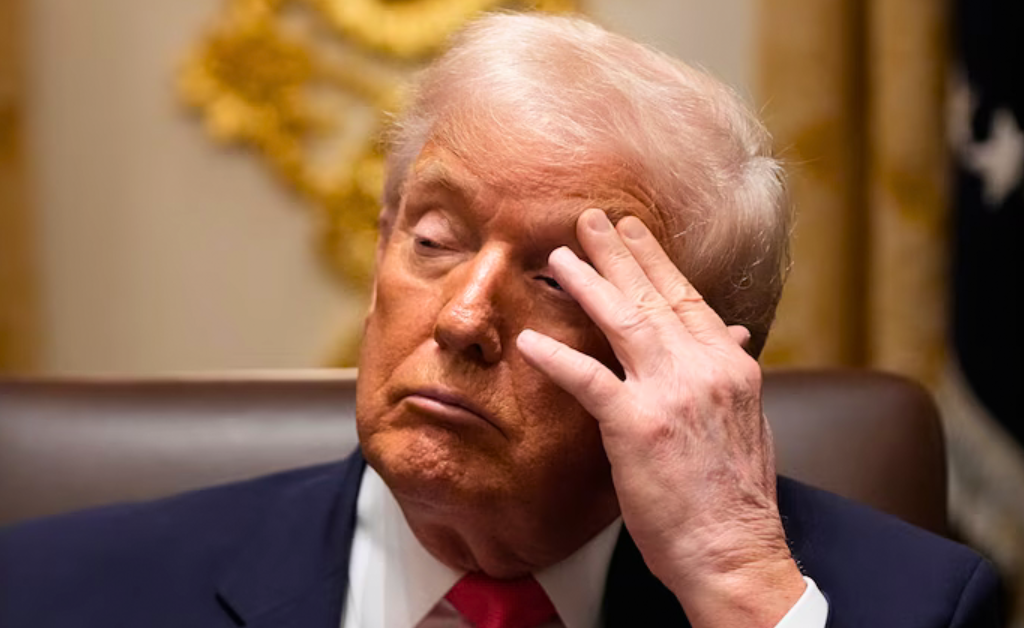



- Multiple recent polls show declining support for Trump among self-identified MAGA Republicans, indicating GOP realignment and softened enthusiasm.
- Rising unease over immigration deportation policies, especially among Hispanic Republicans, reflects growing opposition within the base.
- Economic approval ratings have fallen, with weaker GOP backing on the economy threatening Republican prospects for the 2026 midterms.
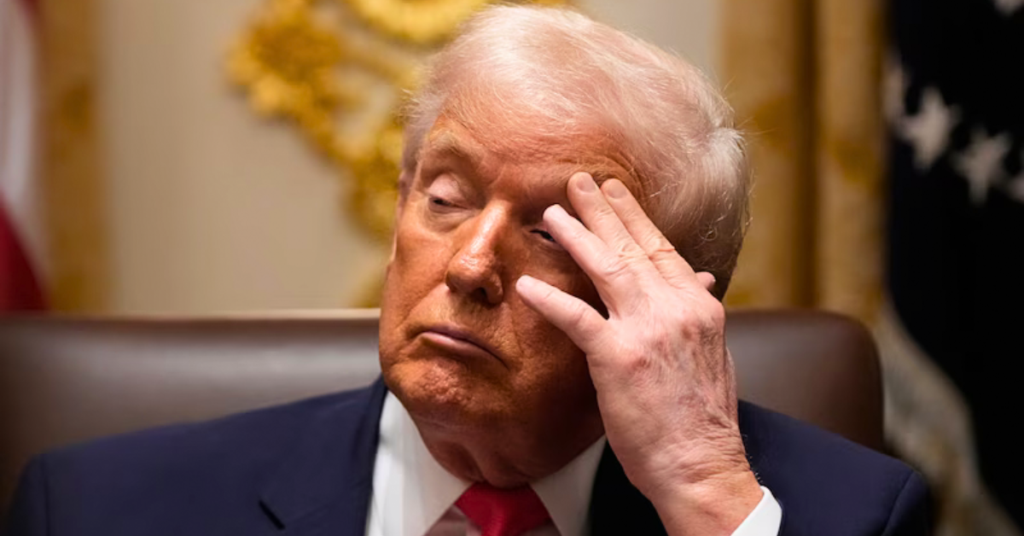
As President Donald Trump approaches the end of his first year back in the White House, a series of fresh surveys are raising eyebrows among political observers.
Three recent polls highlight a noticeable shift: Trump’s once-ironclad hold on his core supporters appears to be softening, particularly among self-identified MAGA Republicans and on key issues like the economy and immigration enforcement.
These trends come at a pivotal moment, with the 2026 midterm elections looming and Republicans defending slim majorities in Congress.
The FrankNez Media Daily Briefing newsletter provides all the news you need to start your day. Sign up here.
– FNM
The most striking finding comes from an NBC News poll conducted between November 20 and December 8, 2025.
Poll 1
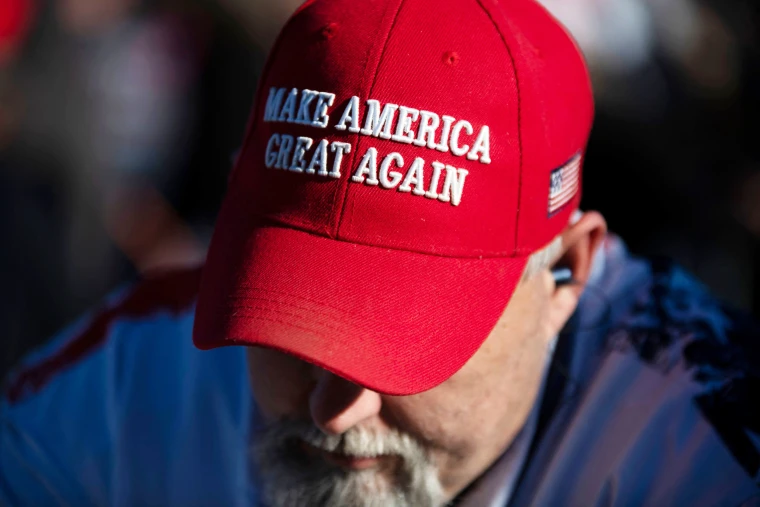
Among self-identified Republicans, the share who say they align more with the MAGA movement has dropped from 57 percent in April to just 50 percent today.
An equal 50 percent now say they identify more with the traditional Republican Party—a clear sign of realignment within the GOP.
Trump’s overall approval rating also edged down from 45 percent to 42 percent in that period, with disapproval climbing from 55 percent to 58 percent.
The poll’s margin of error is +/- 1.9 percentage points.Even among those who still identify as MAGA supporters, enthusiasm has cooled slightly.
While 70 percent strongly approve of Trump’s job performance, that’s an 8-point drop from 78 percent in April.
For Republicans who lean more toward the traditional party, strong approval stands at 35 percent, down from 38 percent earlier in the year.
Experts see these numbers as part of a broader pattern.
Costas Panagopoulos, a professor of political science at Northeastern University, told Newsweek: “Trump’s popularity seems to be on a downward spiral, with more and more Republicans and even die-hard MAGA supporters questioning their affinity for the president.
At the root of much of this is probably voters’ perception that the administration and Republicans in Congress are doing little to address their economic concerns, but frustration about these shortcomings seem to be spilling over into other matters.”
Immigration policy is another flashpoint.
Poll 2
A Pew Research Center survey from October 6-16 found that 20 percent of Republicans and Republican-leaning voters believe the administration is going “too far” on deportations, up from 13 percent in March.
Overall, 64 percent still back the approach, but the uptick is notable—especially among Hispanic Republicans, where opposition jumped from 28 percent to 47 percent.
The poll, with 8,046 respondents and a margin of error of +/- 1.7 percentage points, underscores growing unease with the mass deportation promises that helped propel Trump back to office.
White House spokesperson Abigail Jackson defended the policy in a statement to Newsweek: “The president was elected based on his promise to carry out the largest mass deportation operation in history.
As the administration continues arresting and deporting illegal aliens with additional criminal charges, anyone illegally present in the United States is eligible for deportation.”
Economic concerns appear to be the biggest driver of the shift.
Poll 3
A Reuters/Ipsos poll from December 12-14 showed just 33 percent of adults approving of Trump’s handling of the economy—his lowest mark of the year.
Among Republicans, approval dipped from 78 percent earlier in December to 72 percent.
Trump’s overall approval in that survey stood at 39 percent, with the poll’s margin of error at three percentage points.
The White House has pushed back on the criticism, emphasizing inherited challenges.
A spokesman previously told Newsweek that Trump “inherited the worst inflation crisis in a generation from Joe Biden’s incompetence,” and that his administration has “rapidly cooled inflation to a 2.5 percent annualized rate.”
Spokesman Kush Desai added: “Turning the Biden economic disaster around has informed nearly every action the Trump administration has taken since Day One.”
Polls That Back Up This Sentiment
Broader polling trends echo these concerns.
Gallup’s November 3-25 survey showed Trump’s approval at 36 percent overall, with Republican support at 84 percent—a seven-point drop from the previous month.
Emerson College Polling in December found 41 percent approval and 50 percent disapproval, with Republican approval down from 91 percent at inauguration to 79 percent.
Even in GOP strongholds, state-level data from Morning Consult shows net positive ratings in places like Wyoming (66 percent approval) but softening in states like Ohio and Iowa.
Political analysts warn that these numbers could complicate the 2026 midterms.
Mark Shanahan, who teaches American politics at the University of Surrey, told Newsweek: “Trump isn’t on the ballot in 2026, but he will still dominate the election.
It will be won and lost on the economy, so if that remains lackluster as the election campaign ramps up, his policies will damage GOP candidates.
And if Republicans lose control of Congress next November, all bets are off for who will be on the ballot for 2028.”
What Happens Next?
Trump has dismissed much of the polling as biased.
In a November Truth Social post, he wrote: “So many Fake Polls are being shown by the Radical Left Media, all slanted heavily toward Democrats and Far Left Wingers… Fake News will never change, they are evil and corrupt but, as I look around my beautiful surroundings, I say to myself, ‘Oh, look, I’m sitting in the Oval Office!'”
For now, the data paints a picture of a president whose base remains largely loyal but is showing signs of fatigue—particularly when it comes to delivering on promises of lower costs and economic relief.
With midterms less than a year away, the coming months will test whether these trends deepen or if the administration can regain momentum.
Independent media is under attack by industry policies, set FrankNez Media as a preferred source below to fight against media suppression.
Also Read: 2 More GOP Leaders Now Resign Back-to-Back
Contact | About | Home | Newsletter
Google is changing how it surfaces content. Prioritize our high-quality news and industry-leading coverage in search results by setting FrankNez Media as a preferred source.