


- Howard Johnson’s, once a 1,000-location roadside dining empire famed for orange‑roofed consistency, dwindled from dominance to near extinction by 2022.
- The final restaurant closed amid scandal and decay, cementing a legacy loss and illustrating how failure to innovate doomed the brand.
Remember those bright orange roofs dotting the highways of mid-century America?
They weren’t just architectural quirks—they were beacons of family road trips, promising fried clams, 28 flavors of ice cream, and a reliable meal no matter where you pulled off the interstate.
For nearly a century, Howard Johnson’s (or HoJo’s, as locals called it) was the undisputed king of roadside dining.
The FrankNez Media Daily Briefing newsletter provides all the news you need to start your day. Sign up here.
But in a quiet, scandal-tinged closure three years ago, the last of its restaurants flickered out, leaving behind a ghost of nostalgia and a stark reminder of how quickly empires can fade in the restaurant world.
It’s hard to overstate just how massive Howard Johnson’s once was.
Details Leading to the Restaurant Chain Closures
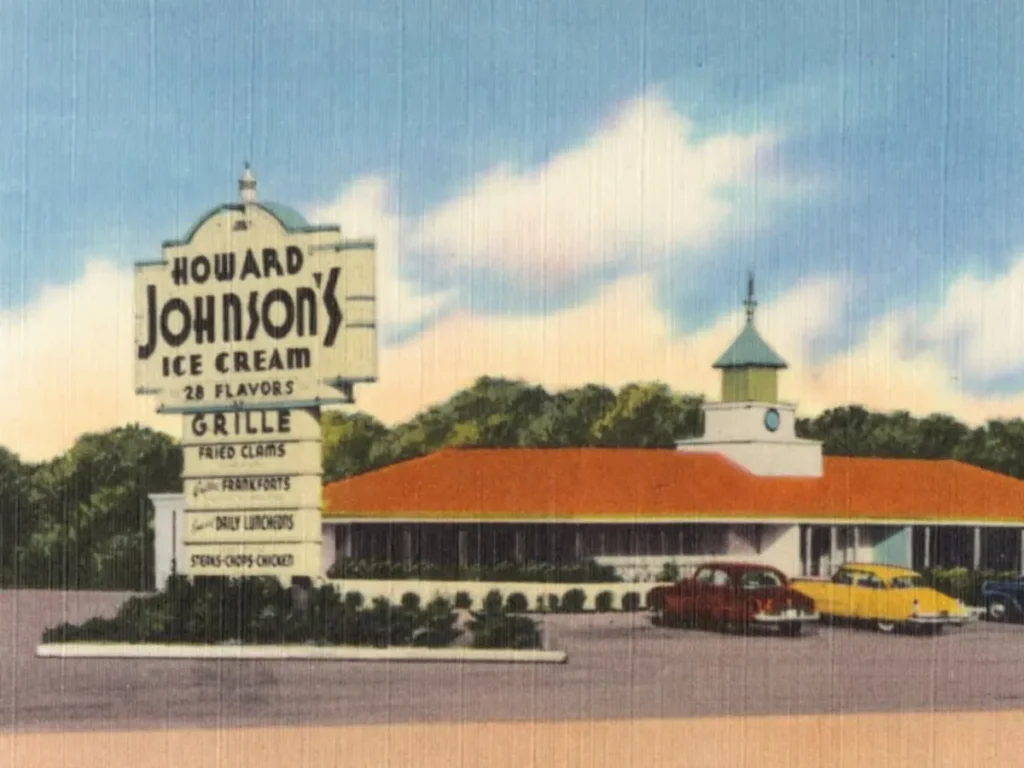
At its peak in the 1970s, the chain boasted roughly 1,000 locations nationwide, making it the largest restaurant operation in the U.S. Founded in 1925 by Howard Deering Johnson as a humble soda fountain and ice cream shop in Quincy, Massachusetts, it exploded into a franchise powerhouse.
By 1935, the first full-fledged sit-down restaurant opened, and by 1940, over 130 eateries spanned New England.
The 1950s and ’60s marked its golden age: orange-roofed diners serving up consistent comfort foods like hot dogs, hamburgers, turkey sandwiches, and those legendary fried clams, all paired with an ice cream lineup that became a cultural staple in the Mad Men era.
What set HoJo’s apart wasn’t just the food—it was the reliability.
“You could put one at the end of a dirt road in the woods back here and you’d do business,” recalled former franchise operator Carl DeSantis in an interview with Eater.
“Howard Johnson’s was the king of the road.
You could make money anywhere… A lot of guys ended up with Howard Johnson’s restaurants that wouldn’t have made it with any other brand or as independents.”
That consistency turned it into a traveler’s best friend, especially as America hit the open road post-World War II.
Many spots even added motor lodges, blending meals with overnight stays and fueling the family vacation boom.
But glory days don’t last forever, and Howard Johnson’s decline reads like a cautionary tale for any business coasting on past success.
Where the Troubles Started
The trouble started in the late 1970s, when relaxed rules led to slipping food quality and service standards, tarnishing the brand’s once-pristine reputation.
Meanwhile, the fast-food revolution was revving up.
Chains like McDonald’s and Burger King swooped in with smaller menus, rock-bottom prices, and lightning-fast service—qualities that HoJo’s, with its sit-down vibe and unchanging lineup, just couldn’t match.
As competition heated up from casual spots like Friendly’s, Applebee’s, and Chili’s, the chain failed to modernize its menu, infrastructure, or marketing.
By the 1990s, locations were shuttering steadily; the count had plummeted dramatically by 1995.
The unraveling accelerated in 1985, when Marriott scooped up the hotel and motel side of the business (now under Wyndham).
That split severed the synergy that had made HoJo’s a one-stop travel empire.
The 2000s were brutal: By 2005, the restaurants were largely ghosts, with only a handful clinging on.
The Lake Placid, New York, outpost—one of the very last—closed in 2015.
Bangor, Maine, followed suit in 2016. Then came the final blow.
On June 2, 2022, the Lake George, New York, location—the chain’s absolute last stand—shuttered permanently after 97 years of operation.
It wasn’t a dignified send-off.
Owner Jon LaRock, who had kept the flame alive amid the decay, faced a devastating scandal that sealed the deal.
A 17-year-old girl reported to police that LaRock had inappropriately touched and kissed her on her first day as an employee.
An investigation uncovered a pattern: LaRock had sexually harassed 15 female employees over the years, ages 14 to 43.
He pleaded guilty in September 2022 to 26 counts of forcible touching and unlawful imprisonment, earning six months in Warren County Jail and six years’ probation.
The closure hit like a gut punch for preservationists and road-food fans.
“Because of the tortured ownership of the brand in its final decades, unless another former franchisee re-opens in their original location — or Wyndham Worldwide, which now owns the Howard Johnson hotel chain and all the relevant Howard Johnson’s trademarks, decides to give it another go — after more than 90 years of operations, the legacy of one of the most influential restaurants in American history will probably end with LaRock,” LaRock himself reflected to Eater.
Damage Gone Too Far for Revival
Three years on, there’s no sign of revival.
Wyndham keeps the name alive on motels, but the restaurant side? It’s over 1,000 closures deep into oblivion, a total wipeout from its 1970s heyday
No new franchises, no pop-up experiments—just echoes of what was.
Howard Johnson’s helped pioneer standardized franchising and shaped how families ate on the go, but its story underscores a brutal industry truth: Innovate or vanish.
As we barrel toward 2026, with drive-thrus evolving into AI-powered utopias, it’s worth pausing at those faded orange roofs (if you can find one). They remind us that even kings of the road eventually hit a dead end.
What forgotten chain might be next?
Also Read: Famous Coffee Chain Now Closing Several Stores Across America