

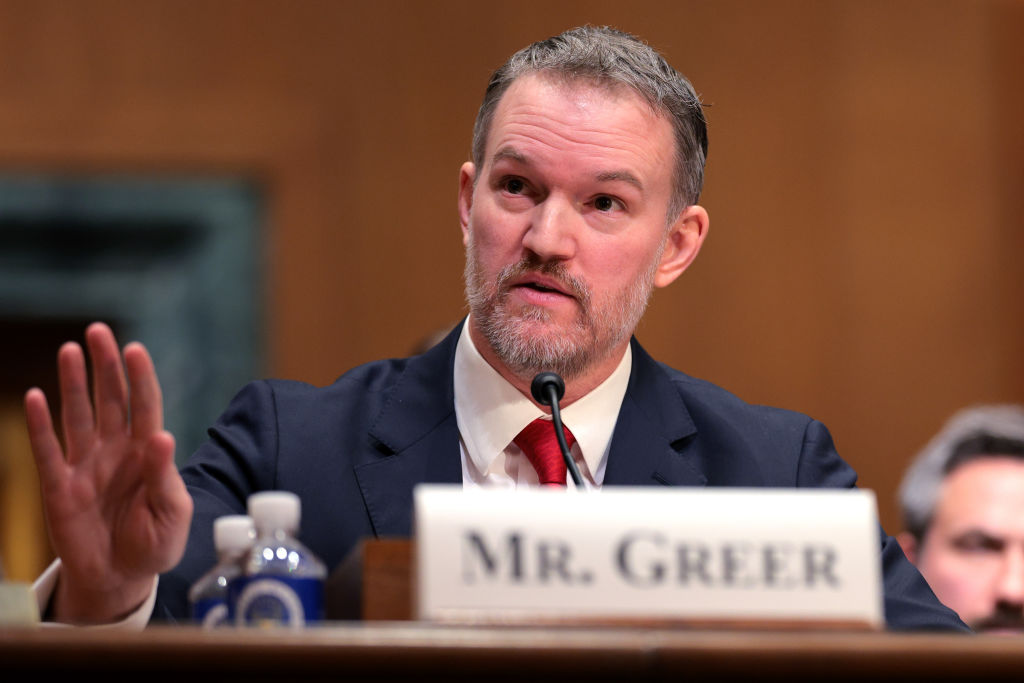
In a sweeping defense of President Donald Trump’s aggressive tariff regime, U.S. Trade Representative Jamieson Greer pulled back the curtain Friday on what he called a meticulously layered strategy designed to “protect the American economy” and rewrite 70 years of lopsided global trade rules.
Speaking to Politico in a wide-ranging interview published just hours ago, Greer dismissed critics branding the approach as “chaos” and instead painted a picture of calculated “concentric rings” of duties radiating outward from China, with potential seismic shifts—including a possible U.S. exit from the USMCA trade pact—looming as early as next year.
The remarks come at a pivotal moment for Trump’s second-term economic agenda.
The FrankNez Media Daily Briefing newsletter provides all the news you need to start your day. Sign up here.
– FNM
With tariffs already reshaping supply chains and sparking heated debates in Congress and on Wall Street, Greer’s comments offer the clearest roadmap yet to the administration’s endgame: leveraging duties not just as punishment, but as a carrot-and-stick tool to force fairer deals, boost domestic manufacturing, and even chip away at the national debt.
Yet amid Supreme Court whispers and warnings of sticker-shock inflation, the plan’s success hinges on a high-stakes legal battle and diplomatic maneuvering that could redefine U.S. alliances.
A Blueprint Born of First-Term Lessons
Greer, a battle-tested trade lawyer who served as chief of staff to Robert Lighthizer during Trump’s inaugural presidency, emphasized continuity with evolution.
“In the first Trump administration, we were charting new waters, right? We were coming into the so-called Washington consensus that tariffs were bad and we shouldn’t protect domestic industry and we shouldn’t try to make tough deals with our friends and foe alike,” Greer told Politico’s Dasha Burns.
“Now having laid the groundwork in the first term, showing we could use tariffs effectively while having a booming economy, the president was able to move to his true vision, which he’s had for many years, which is to protect the American economy with tariffs, use them as leverage where needed to get foreign market access, and otherwise use them for geopolitical issues. So where we were walking in the first term, now we can run and fly, frankly.”
At the heart of this vision: the tariffs unveiled on August 1—dubbed the true “Liberation Day” by Greer, eclipsing the more bombastic April 2 announcement of sky-high rates.
These duties form protective bands around U.S. interests, starting with the heaviest hits on adversaries and easing toward partners.
- China at the Core: The highest tariffs target Beijing, not out of “ill will,” Greer stressed, but due to a “giant trade deficit” and “unfair trading practices.” Recent data underscores the bite: The U.S. trade gap with China has shrunk by about 25% since Trump’s return to office, a trend Greer hailed as movement in the “right direction” during a separate appearance Thursday at the American Growth Summit. A late-October pact with President Xi Jinping extended a tariff truce and eased some export controls, signaling a preference for “stable trade” over outright conflict. “I don’t think anyone wants to have a full-on economic conflict with China and we’re not having that,” Greer said. “We can buy things from them that are not sensitive.”
- Southeast Asia and India in the Next Ring: Nations like Vietnam—plagued by massive deficits and heavy reliance on Chinese components—face the second tier of steep levies. India gets an extra geopolitical nudge for past Russian oil purchases, though Greer expressed optimism for a breakthrough. “I’m confident that we’ll get a deal with India at some point in the future, maybe the near future. It’ll be up to the president and Prime Minister Modi.”
- Allied Adjustments at 15%: Friends like South Korea, Japan, and the European Union aren’t spared but get moderated rates around 15%, aimed at ironing out “big trade issues” through reciprocal tweaks and dismantling non-tariff barriers. Summer deals with Europe already dialed back some duties, Greer noted.
- Western Hemisphere as Safe Haven: The lowest barriers encircle North and South America, prioritizing “secure supply chains” close to home. Brazil stands out as an outlier with elevated rates, but exemptions abound for essentials the U.S. can’t produce—like bananas from Ecuador or coffee from Indonesia—used as bargaining chips in fresh agreements.
This isn’t haphazard, Greer insisted.
“So yes, there’s a strategy. First of all, you don’t change 70 years of trade policy overnight. And second of all, when some people say, ‘Oh, well, this is chaos. What’s your strategy?’, what they really want to know is can we go back to how it was before? And that’s not going to happen.”
USMCA on the Chopping Block? ‘Only Good Deals’
Nowhere is the strategy’s boldness clearer than in North America.
The USMCA, Trump’s 2020 revamp of NAFTA, faces a mandatory review in July 2026—and Greer didn’t rule out scrapping it altogether.
“The president’s view is he only wants deals that are a good deal. The reason why we built a review period into USMCA was in case we needed to revise it, review it or exit it,” he told Politico. Trump himself echoed the sentiment Wednesday, telling reporters, “We’ll either let it expire or we’ll maybe work out another deal with Mexico and Canada.”
The threat has ignited alarm bells across industries.
Auto manufacturers, farmers, and textile firms—whose operations were rebuilt around USMCA’s rules—kicked off congressional hearings this week in Washington, fretting over a potential unraveling.
Trump has already slapped 25% tariffs on non-compliant Mexican goods and 35% on Canadian ones, layering them atop the pact’s framework.
Greer floated splitting the deal into bilateral pacts with Ottawa and Mexico City, a idea he discussed with the president “just this week.”
Yet Greer framed the review as proactive housekeeping.
The administration is eyeing tighter “rules of origin” to funnel more production stateside, especially in autos and agriculture—USMCA’s biggest pillars.
“When you think about the U.S., Canada, Mexico agreement, there are a few things we trade among us in a massive way. One of them is automobiles, another’s agriculture,” he said, hinting at targeted overhauls.
Battling Inflation Fears and Courtroom Drama
Skeptics, from OECD economists to Sen. Rand Paul (R-Ky.), warn of higher consumer prices and sluggish growth.
Paul even likened Greer to a “Soviet commissar.”
But the trade chief fired back with hard numbers: U.S. GDP surged 3.8% annualized last quarter, with the Atlanta Fed eyeing 4.2% for 2026.
Inflation?
“In check,” he said, pinning spikes on domestic culprits like housing and Obamacare—not imports.
“People are worried about housing, they’re worried about healthcare—things we don’t import.”
On pass-through costs, Greer got nerdy: Exporters often “eat the tariff” through competition, as seen with a hundred banana growers vying for U.S. shelves.
Secular trends, not duties, drove recent coffee and beef hikes, he added.
And for leverage?
September’s executive order flagged exemptions for unproducible goods, already unlocked in deals with Quito, Jakarta, and Hanoi.
“There’s never really a 1-to-1 with a tariff. In the first term, when we put tariffs on China, inflation actually went down.”
The wild card: The Supreme Court, which could soon rule on the tariffs’ legality under the International Emergency Economic Powers Act (IEEPA).
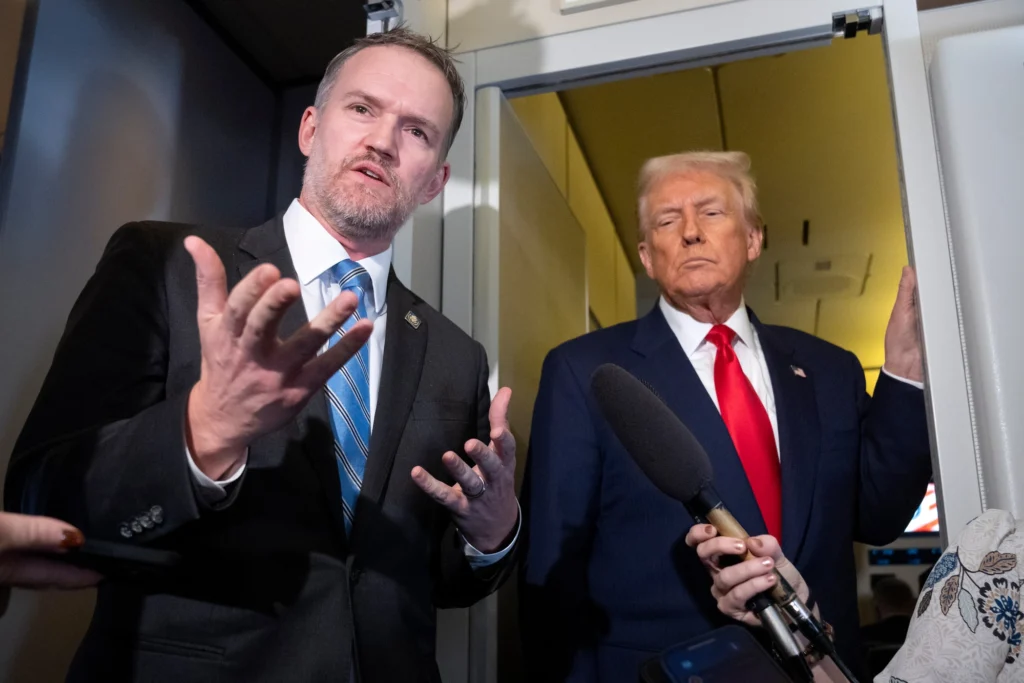
Invoking a “trade deficit emergency” and manufacturing erosion, Trump wielded IEEPA for flexibility.
“First of all, we believe the law and the facts are on our side,” Greer said.
“This Supreme Court has talked about how important it is to simply analyze the plain text of the law. And if you look at the plain text, it says the president, if he determines there’s an emergency, he can regulate imports.”
Backup tools exist, but IEEPA “fits the situation.”
A loss wouldn’t doom tariffs—they’re “going to be a part of the policy landscape going forward”—but it could force congressional tweaks.
Greer, ever the optimist, urged lawmakers to “codify it,” citing bipartisan buzz for using revenue to fund reindustrialization and debt relief.
Bipartisan Echoes and Global Ripples
Greer’s pitch is landing beyond MAGA circles.
He’s fielded nods from “progressive or conservative, free trader or protectionist,” including Iowa’s Chuck Grassley, a trade veteran aligned on prying open markets for pork and soybeans.
Southeast Asia’s newfound appetite for U.S. soy? A tariff-fueled win, Greer boasted.
Russia? “Not very much” trade potential, even post-war, with focus squarely on “big export markets.”
And China policy? “Pro-American, not anti-China,” prioritizing jobs and security over decoupling.
As tariffs generate real cash—earmarked for everything from infrastructure to fiscal relief—the strategy’s proving its mettle.
But with hearings underway, allies jittery, and the high court looming, Trump’s trade revolution is far from settled.
Greer, wrapping the interview, summed it up bluntly: “The president wants deals but he only wants good deals. And so whenever you present a deal to the president, the question is, am I better off with just having the tariff?”
Also Read: A DOJ Whistleblower Now Makes Revelation That Undermines the Judicial System’s Integrity
Contact | About | Home | Newsletter