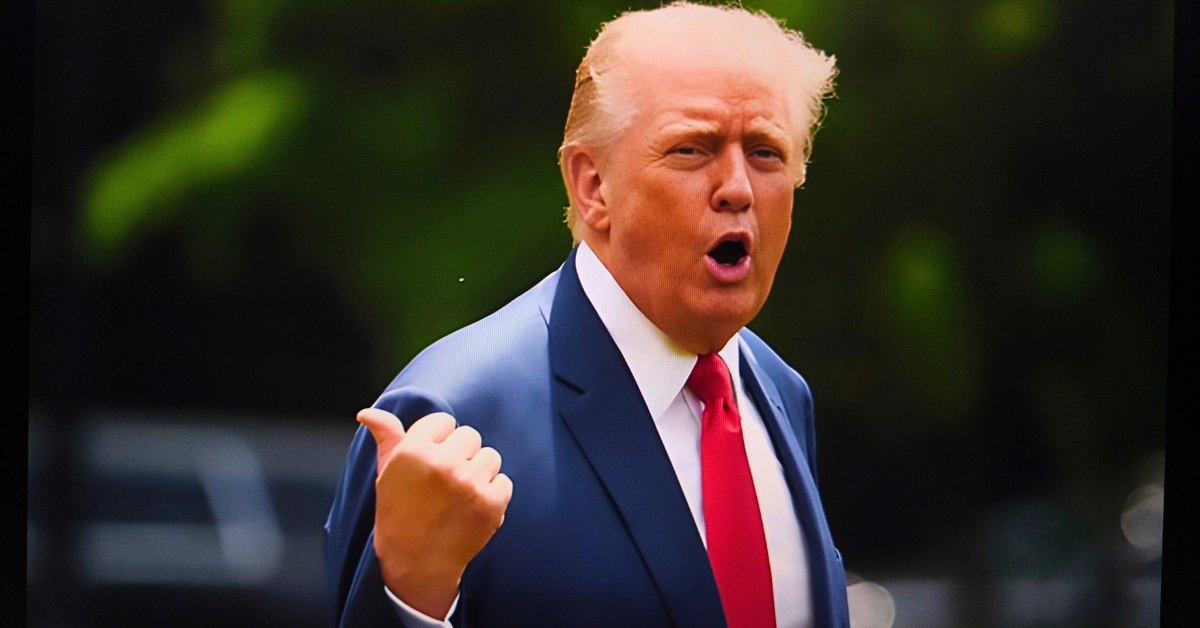
- White House lightly dismissed reports of Trump discussing a third term with Alan Dershowitz, framing comments as flattering and not serious.
- Legal experts widely call third-term workarounds implausible; constitutional amendment or reinterpretation faces monumental hurdles.
- No active legislative or legal push exists; the idea is treated as political theater rather than a realistic plan.
The White House has pushed back lightly on fresh reports that President Donald Trump recently discussed the idea of serving a third term with his longtime legal adviser Alan Dershowitz, who is writing a book on the topic.
According to a Wall Street Journal report published earlier this week and reported by multiple media platforms, Dershowitz met with Trump in the Oval Office and presented a draft of his forthcoming book, titled Could President Trump Constitutionally Serve a Third Term?
The renowned lawyer reportedly explored various hypothetical scenarios where the Constitution’s language on term limits might allow for interpretations beyond the standard two-term restriction.
The FrankNez Media Daily Briefing newsletter provides all the news you need to start your day. Sign up here.
– FNM
In response to questions about the meeting, White House spokeswoman Abigail Jackson told reporters: “The American people would be lucky to have President Trump in office for even longer.”
The comment has sparked a mix of amusement, concern, and dismissal across political circles, reviving a conversation that has bubbled up periodically throughout Trump’s political career.
Dershowitz himself downplayed any serious intent, telling the Journal: “[Trump] found it interesting as an intellectual issue. Do I think he’s going to run for a third term? No, I don’t think he will run for a third term.”
He noted that while the 22nd Amendment clearly states, “No person shall be elected to the office of the President more than twice,” certain rare situations—like a deadlocked Electoral College throwing the decision to Congress—could create interpretive gray areas.
However, Dershowitz emphasized he doesn’t expect Trump to pursue it.
White House Chief of Staff Susie Wiles echoed a similar sentiment in a recent Vanity Fair profile, stating plainly that Trump “knows he can’t run again.”
Senate Majority Leader John Thune, when pressed by reporters, shrugged it off: “Not without a change in the Constitution.”
He added, “I think that you guys keep asking the question and…I think he is having some fun with it, probably messing with you.”
Experts Weigh In
Legal experts have largely dismissed far-fetched workarounds.
Hofstra University professor James Sample called some speculated scenarios “absurd,” though he flagged one as having “quasi-credible concern”: a ticket where allies like Vice President JD Vance win in 2028, then resign, paving the way for Trump—potentially elected as House Speaker—to ascend via succession.
Sample stressed this remains highly improbable.
Any genuine effort to extend term limits would face monumental hurdles.
Changing the Constitution requires a two-thirds vote in both the House and Senate, followed by ratification from three-fourths of the states—a process that hasn’t succeeded for major reforms in decades.
Trump’s Past Flirtations with the Idea
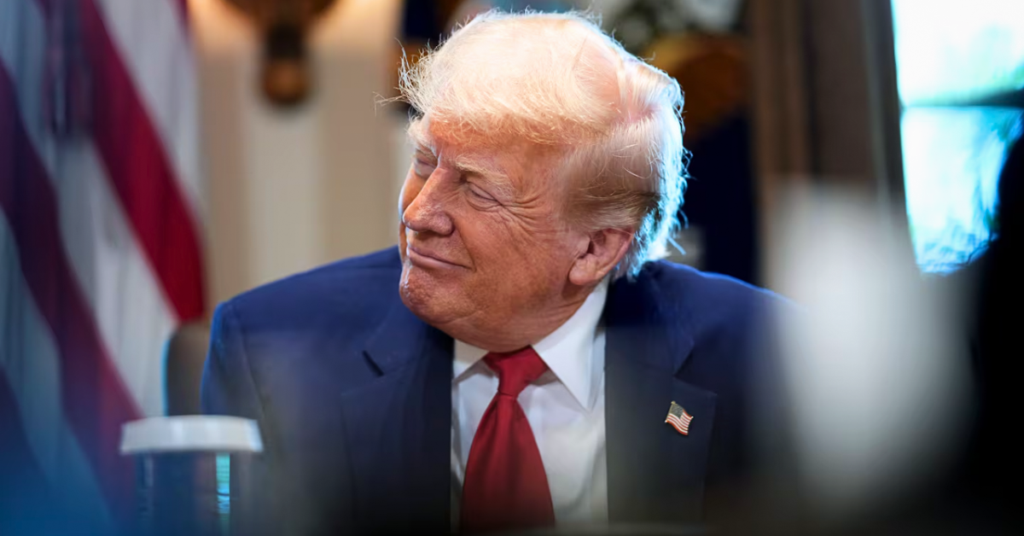
This isn’t the first time the third-term notion has surfaced around Trump.
Back in October, aboard Air Force One, he told reporters: “If you read it, it’s pretty clear. I’m not allowed to run. It’s too bad.”
Yet earlier, in a March NBC News interview, he hinted otherwise: “There are methods which you could do it,” before adding, “it is far too early to think about it.”
Supporters have occasionally fueled the speculation.
At a recent White House Hanukkah reception, billionaire donor Miriam Adelson—whose family has poured hundreds of millions into pro-Trump causes—jokingly offered Trump another $250 million to run again, prompting laughter and a playful embrace from the president.
Former strategist Steve Bannon has gone further, insisting in interviews that a third term is inevitable.
Trump has also ruled out one rumored path: running as vice president in 2028 and then stepping up.
In October remarks, he shot down that idea directly.
Earlier Push for a Constitutional Change
The debate gained traction earlier this year when Republican Representative Andy Ogles of Tennessee introduced a House joint resolution in January to amend the 22nd Amendment.
His proposal would allow a president to be elected up to three times, but only if the first two terms were non-consecutive—language tailored specifically to Trump’s situation, as his 2017-2021 and current terms bookend a loss in 2020.
Ogles argued it was necessary to give Trump more time to “correct the disastrous course” of prior policies.
The measure included safeguards: no additional term after two consecutive ones, barring former presidents like Barack Obama, George W. Bush, or Bill Clinton from eligibility.
Despite the buzz among some MAGA loyalists, the resolution went nowhere.
Constitutional amendments require supermajorities in Congress and broad state support—thresholds experts described as “impossibly difficult” even with Republican control of both chambers at the time.
Harvard Law professor Stephen Sachs noted the steep odds, pointing out that the last successful amendment was in 1992, and major changes often fail spectacularly.
Democrats countered swiftly.
Representative Dan Goldman reintroduced a resolution reaffirming the 22nd Amendment’s “explicit prohibition” on third terms, condemning any suggestions otherwise as threats to democratic norms.
Why the 22nd Amendment Exists
The two-term limit stems directly from Franklin D. Roosevelt’s unprecedented four elections during the Great Depression and World War II.
After his death in 1945, Congress moved quickly to enshrine the tradition George Washington started by stepping down after two terms.
Ratified in 1951, the amendment has held firm ever since, preventing potential third runs by popular presidents like Dwight Eisenhower, Ronald Reagan, and Bill Clinton.
Scholars note the amendment’s focus on elections leaves theoretical ambiguities around succession, but courts and consensus have treated it as an absolute cap on presidential service beyond eight years (or ten in partial-term cases).
Looking Ahead: No Serious Momentum
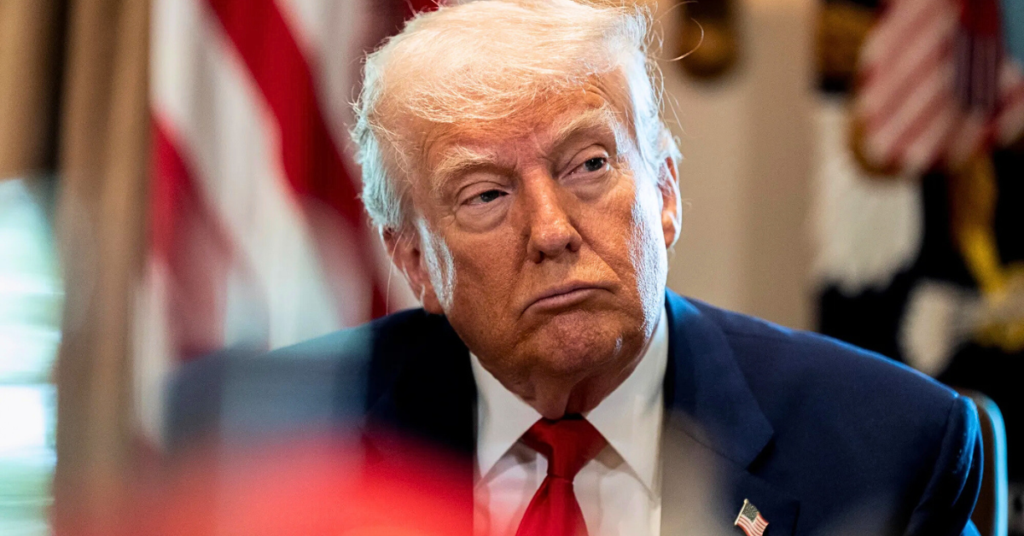
As of now, there’s no evidence of active legislative or legal efforts to challenge the term limit.
Trump himself has shifted focus to his current agenda, including economic claims in a recent prime-time address where he touted investments and falling prices amid mixed public approval on costs of living.
Polls from late 2025 show divided opinions even among Trump voters on a hypothetical third term, with many prioritizing other issues like inflation and immigration.
While the conversation keeps cropping up—often sparked by Trump’s offhand remarks or ally enthusiasm—insiders and observers agree it’s more political theater than plausible plan.
For a president known for keeping opponents guessing, floating the impossible might just be another way to dominate the headlines.
Independent media is under attack by industry policies, set FrankNez Media as a preferred source below to fight against media suppression.
Also Read: Trump’s Latest Executive Order is Now Under Fire by GOP
Contact | About | Home | Newsletter
Google is changing how it surfaces content. Prioritize our high-quality news and industry-leading coverage in search results by setting FrankNez Media as a preferred source.









noneof yourbusiness
December 19, 2025Dan Goldman is an idiot!! Th3e 18th Amendment made alcohol illegal. And the 21st Amendment reversed the 18th Amendment.
There is nothing stopping a 28th+ Amendment from being added that modified or reverses any part of any existing Amendment including the 22nd Amendment. It does not matter wtf the 22nd Amendment says – it can be changed.