

- Growing split in GOP: younger conservatives favor America First over continued U.S. military aid to Israel, weakening longtime party unity.
- Humanitarian concerns in Gaza and shifting polls indicate bipartisan skepticism that could reshape Republican primaries and policies.
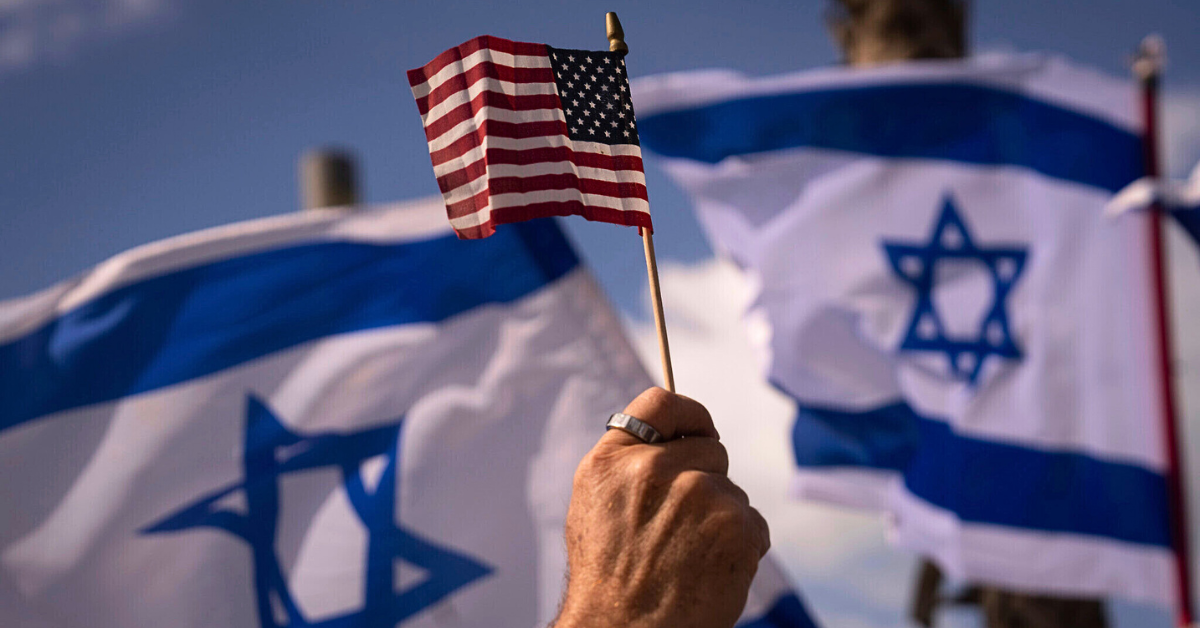
For decades, unwavering support for Israel has been a cornerstone of Republican politics, often setting the party apart from Democrats in foreign policy debates.
But recent polls suggest that unity is fraying, particularly among younger conservatives who prioritize an “America First” agenda over continued military aid to Israel.
Divisions bubbled to the surface at Turning Point USA’s AmericaFest event in Phoenix this weekend, where prominent voices questioned the party’s long-standing stance.
The FrankNez Media Daily Briefing newsletter provides all the news you need to start your day. Sign up here.
– FNM
Tucker Carlson, speaking at the gathering, challenged the idea of prioritizing foreign aid.
“Is it ‘America First’ to take money from a foreign lobby so you’ll send taxpayer dollars to that country? Even the question kind of answers itself, obviously it isn’t.
That’s not an attack on Israel; it’s certainly not antisemitism, despite the efforts of many to claim that it is. It’s just an obvious statement,” he said.Steve Bannon echoed the sentiment, accusing conservative commentator Ben Shapiro of being “Israel First.”
Megyn Kelly described a broader rift: “Charlie was with young people every day for a living, and in particular, young Republicans. And he was seeing what I was seeing in my neck of the conservative woods, which was, this party is changing on the issue of Israel.
When I was at Fox, you supported Israel, period. No one was interested in your actual opinion; you just supported Israel, which was fine for me because I did. But the party started to turn after 10/7.
Uniform support and sympathy for Israel on 10/7, but as the world went on two years later, people were starting to turn on them.”
These comments highlight a tension that has been building for months, fueled by the ongoing war in Gaza and concerns over U.S. taxpayer dollars funding foreign conflicts.
Generational Divide Emerges in Republican Polling
A December poll from the Institute for Middle East Understanding Policy Project and YouGov, surveying 1,287 Republicans from November 14-24, revealed stark differences by age.
Among Republicans under 45, Israeli Prime Minister Benjamin Netanyahu’s favorability was nearly split—31% favorable versus 29% unfavorable.
For those 45 and older, it was 59% favorable to 19% unfavorable.
Support for increasing U.S. aid to Israel followed a similar pattern: just 23% of younger Republicans favored it, compared to 31% of older ones.
The poll, with a margin of error of ±3 percentage points, also found that 51% of Republicans under 45 would prefer a 2028 presidential candidate who supports reducing taxpayer-funded weapons to Israel.
A Pew Research Center survey from September 22-28 showed a slight uptick in Republican concern: 19% said Israel had gone “too far” in Gaza, up from 12% in December 2023 and 13% in September 2024.
A YouGov/Economist poll from August indicated that 56% of Republicans sympathized more with Israelis than Palestinians—down from 61% in April 2024.
Brent Buchanan, president of polling firm Cygnal, attributed the shift to external narratives and “America First” priorities.
“Younger conservatives are especially concerned with how much the U.S. gives to Israel to fund a war that they fear they’ll be sucked up into boots-on-the-ground,” he said.
“Younger conservatives are ‘less conservative versus liberal-minded and more America-First-minded.’”
Bipartisan Skepticism and the Gaza Humanitarian Crisis
The erosion in Republican support comes amid growing bipartisan scrutiny of U.S. aid to Israel, which has provided billions in military assistance since the October 7, 2023, Hamas attack.
Concerns about Gaza’s humanitarian situation—widespread starvation, civilian casualties, and the ongoing blockade—have intensified debates.
Representative Marjorie Taylor Greene has been vocal, posting on X in July: “It’s the most truthful and easiest thing to say that Oct 7th in Israel was horrific and all hostages must be returned, but so is the genocide, humanitarian crisis, and starvation happening in Gaza.”
While some Republicans like Carlson and Bannon amplify these views, congressional Republicans largely remain supportive of Israel.
The Trump administration has continued strong backing, including arms sales and diplomatic support, but polls suggest voter sentiment could influence future policy.
Other surveys reinforce the trend.
A Chicago Council on Global Affairs report from July noted Republicans are more satisfied with U.S.-Israel ties under Trump, but younger ones express doubts about aid levels.
Gallup polls show overall U.S. approval of Israel’s actions in Gaza at historic lows, though Republican support holds firm at around 71%.
What Happens Next?
As the war drags on, these divisions could reshape GOP primaries and midterm strategies.
Buchanan noted: “It’ll be interesting to see where this issue stands in the issue hierarchy of midterm voters late next year, when more time has passed from serious Israeli operations in Gaza.
For many voters, hot-button issues are out-of-sight-out-of-mind.”
For now, the Republican Party’s traditional pro-Israel stance endures among its leadership and older base.
But the voices at AmericaFest—and the data behind them—signal that younger conservatives are rethinking what “America First” truly means in foreign policy.
Independent media is under attack by industry policies, set FrankNez Media as a preferred source below to fight against media suppression.
Also Read: Bill Clinton Now Reacts to Heavily Redacted Epstein Photos Featured in Pool
Contact | About | Home | Newsletter
Google is changing how it surfaces content. Prioritize our high-quality news and industry-leading coverage in search results by setting FrankNez Media as a preferred source.