- U.S. forces captured Venezuela's President Nicolás Maduro in a large scale strike, marking a bold escalation and U.S. oversight of a transition.
- China and Russia condemned the attack, raising real risks of diplomatic, economic, or indirect involvement that could widen the conflict.
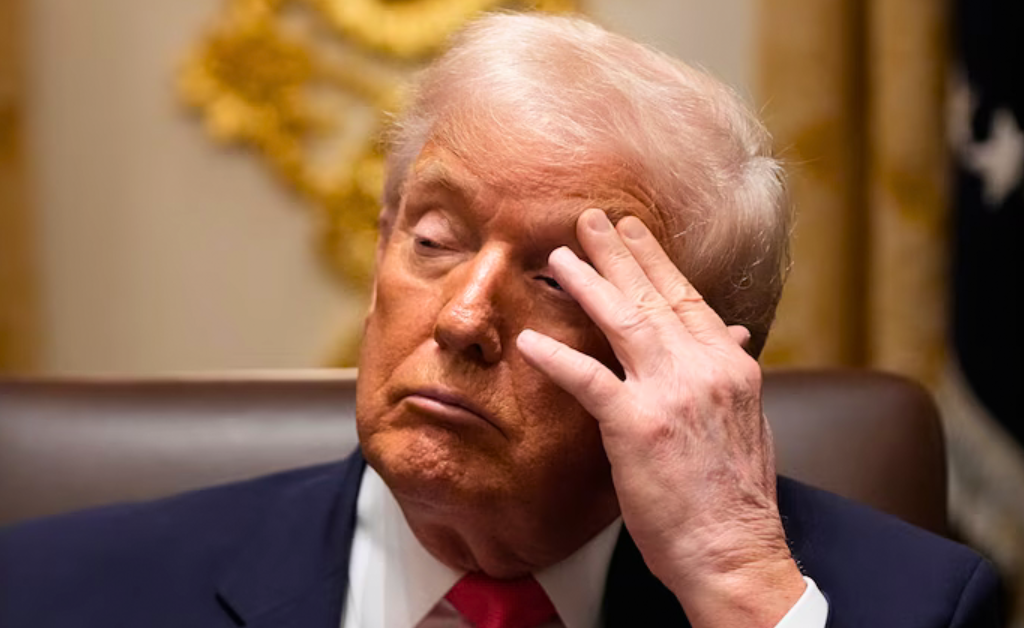
In a dramatic turn of events that has rattled the international community, President Donald Trump announced on January 3, 2026, that U.S. forces had carried out a “large scale strike” on Venezuela, resulting in the capture of President Nicolás Maduro and his wife, Cilia Flores.
Trump made the revelation in a post on Truth Social, stating: “The United States of America has successfully carried out a large scale strike against Venezuela and its leader, President Nicolas Maduro, who has been, along with his wife, captured and flown out of the Country.
This operation was done in conjunction with U.S. Law Enforcement. Details to follow.”
The FrankNez Media Daily Briefing newsletter provides all the news you need to start your day. Sign up here.
– FNM
Details of the Attack and Operation
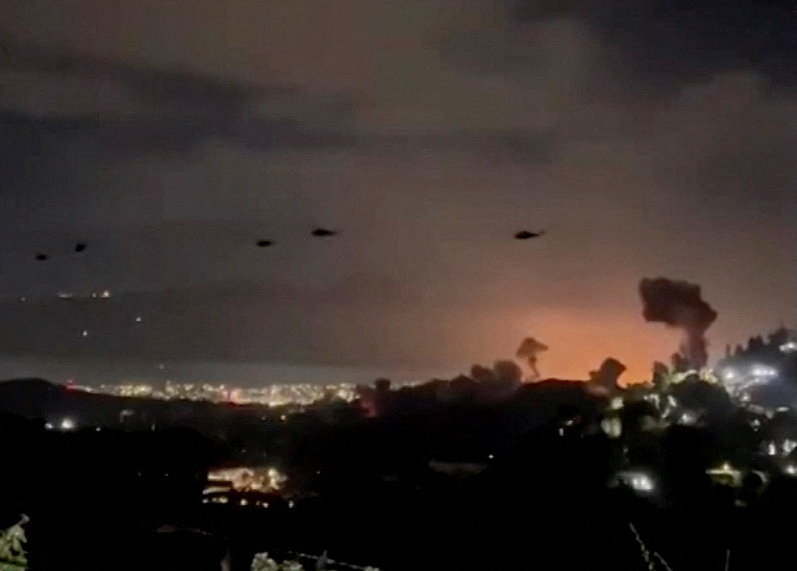
The operation followed reports of explosions in Caracas, with Maduro declaring a national emergency. U.S. Attorney General Pam Bondi confirmed new indictments against the couple in the Southern District of New York on narco-terrorism charges, expanding on a 2020 case.
The bounty on Maduro had been raised to $50 million in August 2025.
During a Fox News interview, Trump said Maduro and his wife were aboard the USS Iwo Jima, heading to New York.
This marks a bold escalation, reminiscent of past U.S. interventions in the region.
International Responses: Distance and Outright Opposition
World leaders responded quickly, with many expressing shock, seeking details, or condemning the action as a breach of sovereignty.
British Prime Minister Sir Keir Starmer described the developments cautiously: “The situation in Venezuela is fast moving.”
In a video on X, he noted the United Kingdom “will establish all the facts and speak to allies.”
He emphasized that the U.K. “was not involved in any way in this operation” and that he would “want to talk to the president” to understand the full picture.
Starmer avoided direct condemnation, saying he needed to “establish the facts” first.
The European Union took a similar measured approach.
European Commission President Ursula von der Leyen stated: “Following very closely the situation in Venezuela. We stand by the people of Venezuela and support a peaceful and democratic transition. Any solution must respect international law and the UN Charter.”
France’s Minister of European and Foreign Affairs Jean-Noel Barrot offered pointed criticism without full condemnation: “The military operation that led to the capture of Nicolás Maduro violates the principle of non-resort to force that underpins international law.”
He added that “repeated violations of this principle by nations entrusted with the primary responsibility as permanent members of the United Nations Security Council will have heavy consequences for world security, sparing no one.”
Sharp Condemnations from Key Allies of Venezuela
Stronger rebukes came from countries aligned with Maduro.
China’s Ministry of Foreign Affairs declared officials were “deeply shocked by and strongly condemns the U.S.’s blatant use of force against a sovereign state and action against its president.”
The statement continued: “Such hegemonic acts of the U.S. seriously violate international law and Venezuela’s sovereignty, and threaten peace and security in Latin America and the Caribbean region. China firmly opposes it.”
Russia’s Foreign Ministry echoed this, insisting “Latin America should remain a zone of peace” and that Venezuela has the right to “determine its own future without destructive, let alone military, interference from outside.”
They dismissed U.S. justifications, saying “The pretexts used to justify such actions are untenable.”
Iran’s Ayatollah Ali Khamenei accused the U.S. of arrogantly seeking to impose its will, stating: “We will not yield to the enemy; with reliance and trust in Almighty God and with confidence in the people’s companionship, we will bring the enemy to its knees.”
In the region, Mexico rejected the action as a “clear violation of Article 2 of the Charter of the United Nations,” stressing that “dialogue and negotiation are the only legitimate and effective means of resolving existing differences.”
Brazil’s President Luiz Inácio Lula da Silva called it “a grave affront to Venezuela’s sovereignty” and “yet another extremely dangerous precedent,” warning of a path to “a world of violence, chaos, and instability.”
The Escalation Risk: Potential Involvement of Russia and China
The operation heightens tensions with Russia and China, both of whom have invested heavily in Venezuela.
Russia has provided military support and views the country as a strategic foothold in the Americas, while China is a major creditor and oil purchaser.
Their vehement condemnations raise concerns about broader involvement.
Analysts worry that if instability persists—through Venezuelan military resistance or economic fallout—Moscow or Beijing could respond with increased diplomatic isolation of the U.S., economic countermeasures, or even indirect support to remaining Maduro loyalists.
Russia’s past affirmations of “full support and solidarity” with Venezuela during U.S. sanctions, combined with China’s warnings about threats to regional peace, suggest this could spiral into a proxy confrontation.
Venezuela’s Defense Minister Vladimir Padrino López has mobilized forces, decrying “the worst aggression” in history and calling for resistance.
What Happens Moving Forward?
Amid the criticism, allies like Argentina’s President Javier Milei cheered: “FREEDOM MOVES FORWARD. LONG LIVE FREEDOM DAMMIT.”
Ukraine’s Foreign Ministry praised the move for addressing human rights violations under Maduro.
This strike follows escalating U.S. actions: strikes on cartel vessels, a CIA drone operation, tanker seizures, and a blockade.
Trump has framed Venezuela as a “narco-state” since the disputed 2024 election.
With Maduro removed, Trump has signaled U.S. oversight of a transition, though details are sparse.
The fallout—legal battles, potential refugee flows, and strained great-power relations—could reshape global dynamics.
As Venezuelan exiles celebrated in places like Chile, the world braces for uncertainty.
Removing a leader is one thing; stabilizing a nation and avoiding wider conflict is another.
Independent media is under attack by industry policies, set FrankNez Media as a preferred source below to fight against media suppression.
Also Read: Bill Clinton Now Reacts to Heavily Redacted Epstein Photos Featured in Pool
Contact | About | Home | Newsletter
Google is changing how it surfaces content. Prioritize our high-quality news and industry-leading coverage in search results by setting FrankNez Media as a preferred source.