


- NABS filed Chapter 11 on Dec 3, 2025, listing assets and liabilities between $500,001 and $1 million while continuing operations.
- Tariffs, rising lumber and material costs, and a creditor lawsuit from Proventure Capital intensified financial strain on the mid-sized supplier.
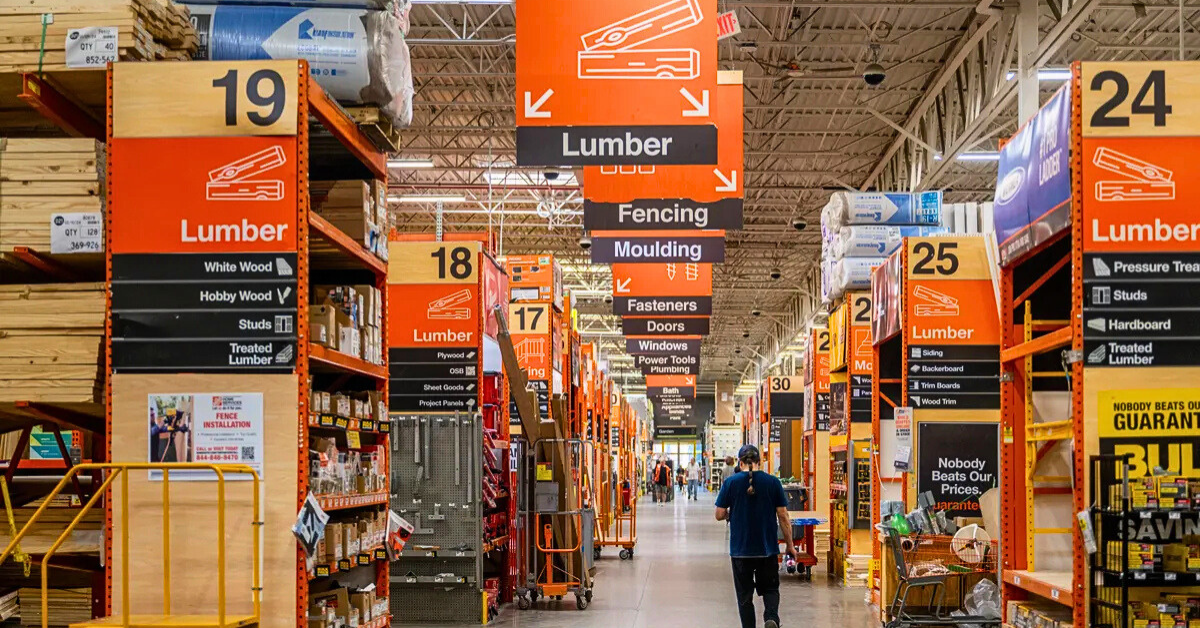
- Big retailers like Home Depot and Lowe’s can absorb tariff shocks with scale, leaving smaller suppliers like NABS vulnerable.
YORKVILLE, Ill. — In a stark reminder of how economic pressures can topple even established players in the building supplies world, North American Builder’s Supply (NABS) — a mid-sized rival to giants like Home Depot and Lowe’s — filed for Chapter 11 bankruptcy protection on December 3, 2025.
The move, lodged in the Northern District of Illinois under case number 25-18572, signals deeper troubles brewing in the home construction supply chain, where rising costs from President Trump’s tariffs are hitting smaller operators hardest.
NABS, headquartered in this quiet Chicago suburb, isn’t shutting its doors just yet.
The FrankNez Media Daily Briefing newsletter provides all the news you need to start your day. Sign up here.
– FNM
Details of the Chapter 11 Bankruptcy Filing

The voluntary filing lists estimated assets and liabilities both hovering between $500,001 and $1 million, painting a picture of a company stretched thin but determined to restructure.
Operations are ongoing, with the firm aiming to emerge leaner and ready to serve its base of builders and contractors.
But the paperwork reveals a web of financial strains: unsecured claims from trade creditors and lenders stack up prominently, including a hefty $503,219 owed to Bluetape, Inc., $149,596 to Kapitus Servicing, Inc., and $94,131 from Central Bank Illinois.
At the heart of NABS’s woes appears to be a brewing dispute with Proventure Capital LLC, which slapped the company — and possibly one of its officers — with a lawsuit over alleged unpaid obligations.
It’s the kind of creditor showdown that often tips struggling businesses over the edge, especially when broader market forces are already eroding margins.
What’s Causing the Headwinds?
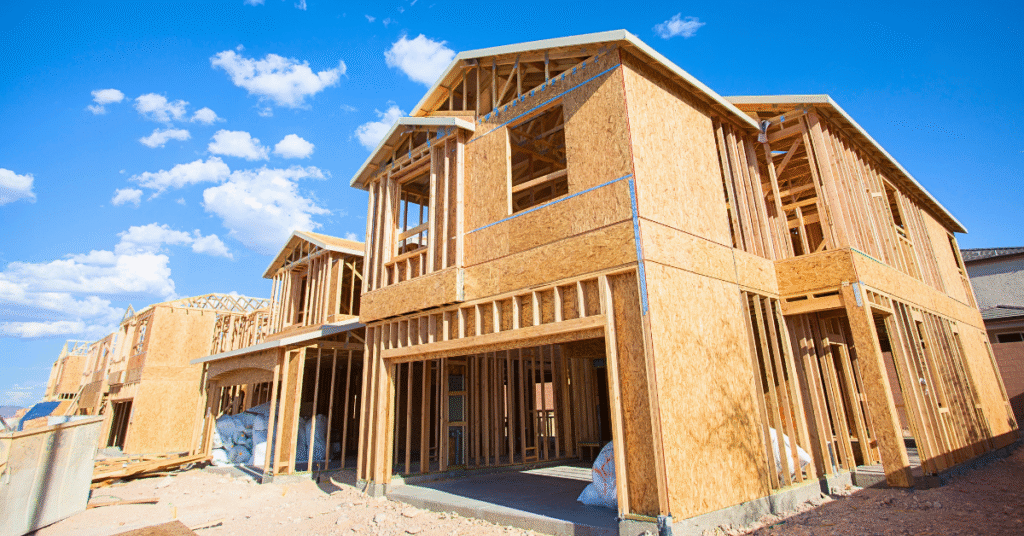
This isn’t an isolated stumble. The U.S. housing sector, still reeling from post-pandemic supply snarls and now battered by renewed trade barriers, is feeling the pinch in ways that favor the big boxes over everyone else.
Trump’s tariffs on imported materials have jacked up costs across the board, with lumber — a staple for any builder — bearing the brunt.
Canadian lumber prices have surged 14.5% in recent months, while concrete is up 8%, and household appliances could climb as much as 20%, according to industry trackers.
“The new tariffs could increase builder costs anywhere from $7,500 to $10,000 per home,” Rob Dietz, chief economist at the National Association of Home Builders (NAHB), told CNBC, drawing from direct feedback from U.S. homebuilders.
That’s not just numbers on a spreadsheet; it’s real pain at the job site.
Leading Builders of America, the trade group for most major public homebuilders, pegs the lumber hit alone at about $4,900 per house on average.
And with roughly a third of U.S. homebuilding wood sourced from Canada — even as domestic producers hike prices to match — the ripple effects are unavoidable.
For folks like Steve Martinez, president of Tradewinds General Contracting in Boise, Idaho, the uncertainty is maddening.
“Our contracts are all fixed price — meaning that from the time we bid a project to the time we start to the time we order the materials, prices could change drastically,” he shared with the NAHB.
To cope, his team is scrambling to preorder as much as possible, but it’s a band-aid on a gushing wound.
Last year, the NAHB calculated that every $1,000 bump in the median new home price shuts out about 106,000 potential buyers. Now, with tariffs potentially inflating the average new build by $17,000 to $22,000, affordability is slipping further away.

Home Depot and Lowes Have an Edge
NABS’s filing underscores a harsh divide: The behemoths like Home Depot and Lowe’s have the scale to weather — and even offset — these storms, while smaller suppliers like NABS get crushed.
Take Home Depot’s approach. In its third-quarter earnings call, Executive Vice President of Merchandising William Bastek downplayed the immediate tariff bite.
“Over 50% of our inventory is not part of tariffs and is obviously sourced domestically.
So we’ll continue to watch that and look forward to the Q4,” he said.
When pressed on price hikes, the strategy gets tactical: Dial back promotions in affected categories to absorb the shock.
“If you think about our job, which is to help impact some of the tariff pressure, being a little less promotional in a couple of those garden areas was just the nature of what we did in Q2,” Bastek added during the second-quarter call.
“And so again, 4 of those 5 categories that we saw an impact from were related to some of the lower-ticket garden projects.”
Lowe’s is playing a similar game of inventory chess.
Chief Financial Officer Brandon Sink reported Q3 stockpiles at $17.2 billion, down $400 million from the prior year — a dip partly offset by $600 million in new acquisitions but dragged by “higher tariffs.”
It’s an evolving headache, he noted.
“We continue to look at tariffs, those ramp here in Q3, we’re expecting that also to continue ramping in Q4, and the wrap to affect the first half of the year,” Sink said on the earnings call.
“So managing through that and trying to understand how that impacts both sales margin and operating margin going forward.”
For the little guys, there’s no such buffer.
NABS, which specializes in lumber, roofing, and other essentials for residential and light commercial projects, has long carved a niche serving local builders who value personalized service over the warehouse mega-stores.
But in an environment where material costs are volatile and buyer pools are shrinking, that edge has dulled.
The average cost of new construction now sits at $422,000, per Cotality/CoreLogic data — and tacking on those tariff-driven increases could price out a whole new wave of families dreaming of homeownership.
“Yet without new housing supply, existing home prices will only keep rising, pushing affordability further out of reach,” Cotality/CoreLogic warned in its analysis.
What Happens Next?
It’s a vicious cycle: Higher costs slow building, which tightens inventory, which drives up prices on the resale market.
As NABS navigates its reorganization, the eyes of the industry are on what comes next. Will this be a one-off cautionary tale, or the first domino in a string of supplier shakeouts?
Trade groups like the NAHB are lobbying hard for tariff relief, but with policy winds shifting, relief feels distant.
For now, builders are hunkering down, preordering where they can, and hoping the big chains’ stability doesn’t swallow up the locals entirely.
One thing’s clear: In the cutthroat world of home supplies, size isn’t just an advantage — it’s survival.
Also Read: Famous Coffee Chain Now Closing Several Stores Across America
Contact | About | Home | Newsletter