



- Bertucci’s, founded 1981, collapsed after three bankruptcies and shuttering nearly 90% of locations, leaving just 12 open.
- Reorganization plan favors secured creditor PHL Holdings; unsecured creditors face minimal recovery capped at $200,000.
- Company launched fast casual "Bertucci’s Pronto" to pivot, but economic pressures and past failures make revival uncertain.
Bertucci’s started back in 1981 in Somerville, Massachusetts, offering something unique: brick-oven pizzas alongside a full Italian menu with pastas, chicken parmigiana, and creative toppings that stood out at the time.
It quickly became a favorite, expanding up and down the East Coast.
But the declines started years ago.
The FrankNez Media Daily Briefing newsletter provides all the news you need to start your day. Sign up here.
– FNM
A History of Bankruptcies

The first bankruptcy came on April 15, 2018, when the chain closed 15 locations.
At that point, it owed about $9 million to suppliers and $110 million to lenders.
In June 2018, Earl Enterprises bought it for roughly $20 million.
By 2019, annual sales were still around $120 million, but cracks were showing.
The second filing hit in December 2022, blaming COVID impacts, inflation, rising costs, and falling sales.
More closures followed, especially underperforming spots in Massachusetts and beyond.
Now, in this third round, the chain has closed nearly 90% of its locations overall.
It’s down to nine in Massachusetts, plus one each in Delaware, Pennsylvania, and Virginia.
The proposed plan keeps the largest creditor, PHL Holdings LLC—with a $23.264 million secured claim—getting monthly interest payments over 60 months while holding onto its lien.
A smaller $69,664 claim from Ameris Bank (doing business as Balboa Capital) gets paid in 53 monthly installments of $1,306.37.
Unsecured creditors, owed an estimated $2.5 million, get a tougher deal: pro rata shares only from selling a New Jersey liquor license, capped at $200,000 total.
“The debtor believes the Plan provides the best means currently available for its emergence from Chapter 11 and the best recoveries possible for Holders of claims and interests,” attorneys R. Scott Shuker and Lauren L. Stricker wrote in the filing.
The company argues liquidation under Chapter 7 would leave unsecured creditors with nothing, as estimated $1.8 million in proceeds wouldn’t cover $24.6 million in secured debt and priorities.
What the Company is Doing to Pivot
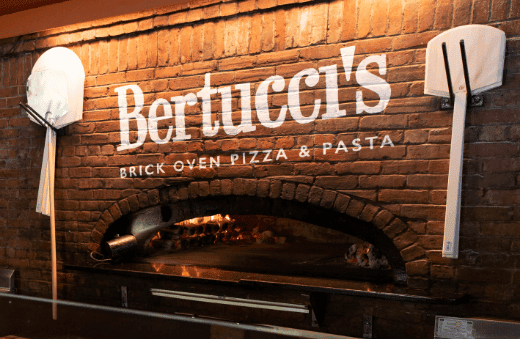
To pivot, Bertucci’s launched “Bertucci’s Pronto,” a fast-casual concept with breakfast items, sandwiches, pizza by the slice, and signature pies.
The first opened in Boston at 22 Tremont Street just before the 2025 filing.
But skeptics point out past attempts, like the failed 2012 “2ovens” spin-off aimed at millennials, didn’t pan out.
And fast-casual shifts have flopped for other sit-down chains.
Economic headwinds aren’t helping. Grocery prices rose 1.1% over the past year, while restaurant meals jumped 4.1%. Since mid-2020, groceries are up 19%, restaurants nearly 24%.
Many Americans are cooking more at home, opting for better ingredients over eating out.
Bertucci’s isn’t alone in the struggle. The casual dining sector, especially Italian chains, has seen a wave of bankruptcies recently.
Restaurant Chains Affected by Economic Headwinds
Take Buca di Beppo, the family-style Italian spot famous for huge portions and eclectic decor.
In August 2024, it filed Chapter 11 after abruptly closing about 13 locations, leaving 44 open.
It blamed post-pandemic recovery issues, rising costs, and staffing challenges.
The chain, founded in 1993, was sold to its lender in the process.
Then, in 2025, more followed: Bravo Brio Restaurants (parent of Bravo Italian Kitchen and Brio Italian Grille) filed in August for the second time in five years, planning to close underperformers and attract investors.
People First Pizza (a Domino’s franchisee) filed in March, and Bertucci’s in April made it a rough year for Italian dining.
Even bigger names like Red Lobster filed in 2024, closing hundreds amid endless shrimp debacles and lease woes.
Experts say inflation, higher wages, and shifting consumer habits—favoring quick service or home meals—are squeezing margins across the board.
Full-service traffic has dipped, and many legacy brands are rethinking models or closing doors.
What Happens Next?
For Bertucci’s fans, the hope is the Pronto concept catches on and the remaining locations thrive.
The reorganization could let it emerge leaner, focused on high-performers and quicker grabs.
But with three bankruptcies in seven years and such a slashed footprint, the road ahead looks bumpy.
Will court approval and better economics save this 44-year-old icon, or will it fade like so many others?
As one filing noted, the plan is “the best means currently available” for survival.
Diners in those 12 spots might want to grab a roll and dough ball while they still can—who knows how long the brick ovens will keep firing.
For more on updates like this, set FrankNez Media as a preferred Google source below.
Also Read: A Massive Convenience Chain Now Closes 500 Stores
Contact | About | Home | Newsletter
Google is changing how it surfaces content. Prioritize our high-quality news and industry-leading coverage in search results by setting FrankNez Media as a preferred source.