


- Peoria Charter Coach filed unexpected Chapter 11 Subchapter V bankruptcy to reorganize while continuing operations and services.
- Rising interest on a pandemic-era loan, from 3.1% to 8.5%, plus higher fuel and operating costs triggered the filing.
- Company remains profitable with steady ridership; passengers should see no service disruptions during restructuring.
An Illinois transportation company has filed an unexpected chapter 11 bankruptcy, resulting in the reorganization and restructuring of its finances.
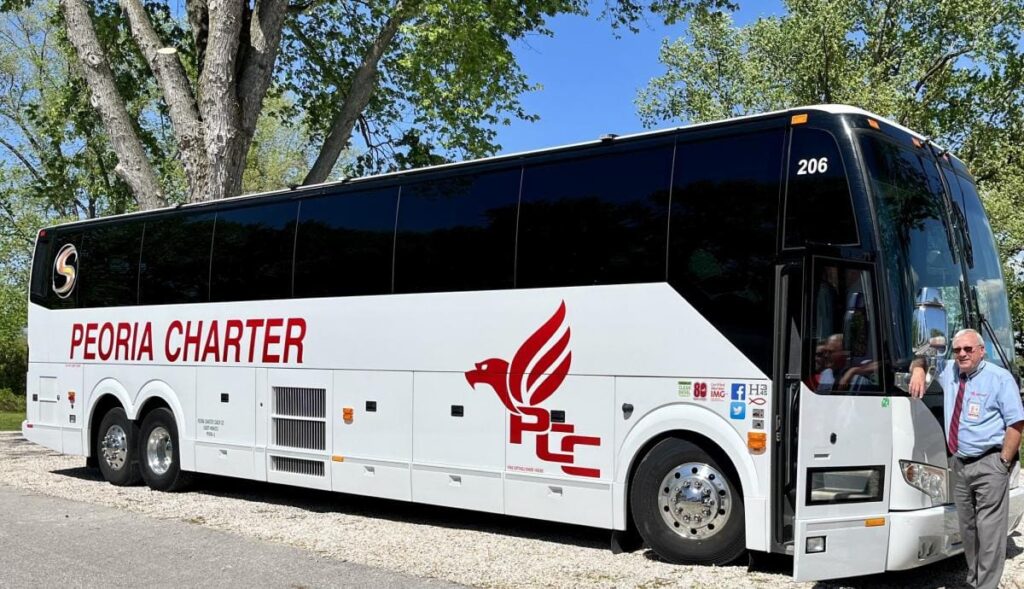
Peoria Charter Coach, a longstanding Illinois bus operator, has filed for Chapter 11 bankruptcy protection.
The move comes as the company grapples with a final lump-sum payment on a pandemic-era loan whose interest rate has ballooned.
The FrankNez Media Daily Briefing newsletter provides all the news you need to start your day. Sign up here.
– FNM
Details of the Chapter 11 Bankruptcy Filing
The filing, made in the U.S. Bankruptcy Court for the Central District of Illinois, lists the company with between 50 creditors and less than $10 million in both assets and liabilities.
Peoria Charter is opting for Subchapter V, a streamlined reorganization process available to smaller businesses with under $2.75 million in assets.
This allows them to keep running while restructuring debts.
Chief Executive James Wang told the Peoria Journal Star that the decision became clear this fall.
“This fall, it became clear that filing for reorganization was our best option and in the best interest of our customers, employees, vendors, and the company’s long-term future,” Wang said in a statement.
What Caused The Trouble?
The root of the trouble? A COVID loan that helped keep the buses rolling during the shutdowns.
Interest rates jumped from 3.1% to 8.5%, making that final payment impossible without restructuring.
Add in soaring gas prices and other operational costs, and it’s been tough to shake off what Wang calls the “Covid hangover” affecting many small businesses nationwide.
But Wang is quick to reassure travelers: operations won’t skip a beat.
“It is a tool to reorganize, not shut down,” he told the outlet.
“Our employees, our services, and our standards of quality remain unaffected. We are still here. Still running buses. Still committed to safety, reliability, and the communities we serve.”
Peoria Charter runs popular routes from Peoria to downtown Chicago, O’Hare Airport, and several Illinois universities like Northwestern and the University of Illinois at Urbana-Champaign.
Many students rely on these for holiday travel to suburbs.
Ridership has actually held steady—or even grown—in the five years since the pandemic, Wang noted.
The company transports around 400,000 passengers over 3 million miles annually, and it’s still profitable with positive cash flow.
This isn’t an isolated case.
The bus and road transportation industry has been hit hard by post-pandemic shifts and economic pressures.
Industry Headwinds Affects Big Players
Just last year, in June 2024, Coach USA—the big player behind Megabus and Short Line—filed for Chapter 11 with debts between $100 million and $500 million.
That company blamed lingering low ridership from COVID and changes in commuting habits.
Coach USA eventually sold off assets to buyers like The Renco Group and Avalon Transportation, preserving many jobs and services.
Over in Europe, German operator Bernie Reisen went bankrupt in September 2025, forcing cancellations of school and regional trips that left customers scrambling.
And it’s not just buses.
The broader transportation world, especially trucking and logistics, has seen a wave of filings throughout 2025 amid what’s been dubbed the ongoing “Great Freight Recession.”
Rising fuel costs, labor shortages, lower demand in some sectors, and those stubborn pandemic loans have pushed many over the edge.
For instance, in November 2025, California-based Zuum, a trucking tech and logistics firm, filed Chapter 11 with assets and liabilities in the $10-50 million range.
Earlier that month, the 101-year-old Port Elizabeth Terminal & Warehouse Corp. sought protection to reorganize amid escalating costs.
October brought Supra National Express, a West Coast shipping company, into bankruptcy court.
Reports noted nearly 20 trucking firms filing in 2025 alone, with long-haul demand dropping sharply.
Other notable ones: AZA Transportation in September, H5 Transport around the same time, and earlier in the year, companies like Dolche Truckload, Elite Carriers, and Balkan Express all turned to Chapter 11 to restructure.
Analysts point to a mix of factors—tariffs adding uncertainty, insurance hikes, and freight rates that haven’t recovered fully.
Even with driver shortages creating some demand, margins are thin.
What Happens Next?
Back to Peoria Charter: the company’s attorney, Jeana Reinbold, emphasized that day-to-day obligations are being met, and the focus is on restructuring that one big lender debt plus equipment leases.
For passengers, it’s business as usual. No disruptions expected, and the goal is to emerge stronger.
This filing underscores how the pandemic’s financial echoes are still rippling through transportation.
While airlines grabbed headlines with their own struggles, ground services like buses and trucks have quietly borne heavy burdens.
If you’re planning holiday travel on Peoria routes, no need to worry—buses are rolling. But it does highlight the fragility in parts of the industry that many rely on for affordable, reliable trips.
For more on updates like this, set FrankNez Media as a preferred Google source below.
Also Read: A Massive Convenience Chain Now Closes 500 Stores
Contact | About | Home | Newsletter
Google is changing how it surfaces content. Prioritize our high-quality news and industry-leading coverage in search results by setting FrankNez Media as a preferred source.