



- Pope Leo XIV publicly admonishes President Trump to avoid military intervention in Venezuela, urging nonviolent alternatives like dialogue and economic pressure.
- The Pope warns that inconsistent U.S. signals risk escalating conflict and a humanitarian catastrophe, stressing diplomacy to prevent wider regional fallout.
VATICAN CITY — In a pointed rebuke that echoed across the Atlantic, Pope Leo XIV, the first American pontiff, has directly cautioned President Donald Trump against resorting to military action to topple Venezuela’s embattled leader, Nicolás Maduro.
Speaking from Istanbul at the close of his inaugural overseas journey, the Pope framed his message as a call for restraint amid escalating tensions that have gripped the Western Hemisphere.
The intervention comes at a precarious moment.
The FrankNez Media Daily Briefing newsletter provides all the news you need to start your day. Sign up here.
Details of the Conflict

Just days ago, on November 30, Trump declared the airspace “above and surrounding” Venezuela “closed in its entirety,” a move that sent shockwaves through diplomatic circles and fueled fears of an imminent U.S. strike.
For months, the Trump administration has intensified its pressure campaign against Maduro, accusing him of enabling drug cartels and driving waves of migration northward.
Yet, as U.S. naval assets mass in the Caribbean and Pacific, the Pope’s words inject a voice of moral urgency into the fray—one that’s hard to ignore from the leader of the world’s 1.3 billion Catholics.
A Pontiff’s Plea for Peaceful Paths

Pope Leo XIV didn’t mince words during his Tuesday press conference in Turkey.
Addressing reporters after wrapping up a series of interfaith dialogues, he laid out a clear alternative to the saber-rattling.
“It is better to search for ways of dialogue, or perhaps pressure, including economic pressure,” he said, his tone measured but firm.
The 68-year-old former cardinal from Chicago, who ascended to the papacy just nine months ago, went further, urging Washington to pursue any desired regime change through non-violent means.
“If that is what they want to do in the United States,” he added, “bring it about by other means than military force.”
It’s a stance that aligns with the Vatican’s long-standing emphasis on diplomacy, but Leo’s personal ties to the U.S.—born and raised in the Midwest—lend it an extra layer of gravity.
As the first pope from American soil, his comments feel less like abstract theology and more like a family intervention, one that could resonate deeply in a divided Washington.
The Powder Keg in Caracas: Drugs, Migration, and Maduro’s Defiance
To grasp why the Pope’s warning lands with such weight, you have to zoom out to the chaos unfolding in Venezuela.
Under Maduro’s rule since 2013, the oil-rich nation has spiraled into economic freefall, hyperinflation, and brutal crackdowns on dissent.
Millions have fled, with Venezuelans now forming one of the largest migrant groups knocking on America’s southern border.
Trump has zeroed in on Maduro as public enemy number one, painting him as the linchpin in the fentanyl crisis ravaging U.S. streets.
“Maduro is facilitating the flow of illegal drugs, via the cartels, into the U.S.,” the president has repeatedly charged, linking the Venezuelan strongman to narco-trafficking networks that have claimed tens of thousands of American lives.
The migration angle cuts even deeper: Trump blames Maduro’s repression for the exodus of over 7 million Venezuelans since 2015, many of whom end up in U.S. asylum claims straining resources from Texas to New York.
The administration’s response has been muscular.
Since early September, U.S. forces have conducted targeted strikes on suspected drug-running vessels in the Caribbean Sea and eastern Pacific Ocean, sinking small boats and neutralizing operations tied to what officials call Maduro-backed syndicates.
The toll is grim: more than 80 people killed in these raids, according to Venezuelan state media and independent monitors.
And with naval deployments swelling—carriers, destroyers, and submarines now patrolling the region—the stage seems set for something bigger.Maduro, for his part, has struck back with fiery rhetoric.
Following Trump’s airspace edict, Caracas branded it a “colonial threat” aimed at shredding Venezuela’s “territorial integrity, aeronautical security and full sovereignty.”
The 62-year-old socialist, who denies any cartel affiliations, has rallied domestic support by framing the U.S. as an imperial bully, even as his government’s grip weakens under sanctions and internal unrest.
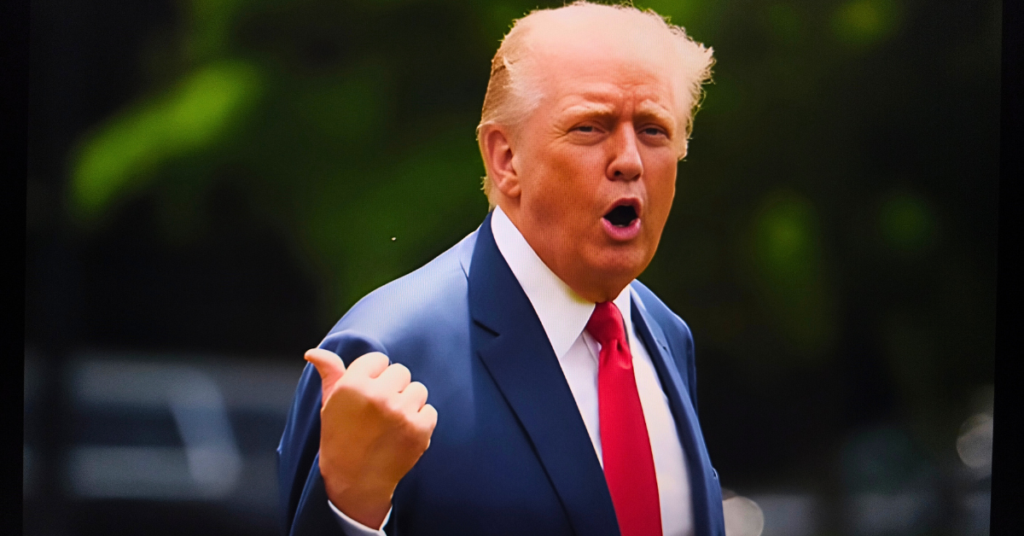
Mixed Signals from the White House: A Call, Then a Threat?
What irks Pope Leo most, it seems, isn’t just the potential for war—it’s the inconsistency pouring out of Washington.
In a subtle but sharp critique, he highlighted the administration’s flip-flopping narrative, referencing a surprising November 21 phone call between Trump and Maduro that briefly hinted at backchannel talks.
“On one hand, it seems there was a call between the two presidents,” Leo noted.
“On the other hand, there is the danger, there is the possibility there will be some activity, some (military) operation.”
He paused for effect before driving the point home: “The voices that come from the United States, they change with a certain frequency.”
That line has already sparked buzz in diplomatic salons from Brasília to Brussels.
Is it a nod to Trump’s unpredictable style, or a broader swipe at an administration juggling hawks and doves?
Sources close to the State Department, speaking off the record, admit the call was an olive branch gone awry—meant to probe Maduro’s willingness to curb drug flows, but quickly overshadowed by the airspace closure.
Critics, including some GOP senators, worry it projects weakness; allies like Brazil’s President Lula da Silva have quietly praised the Pope’s push for talks, seeing it as a lifeline to avert a refugee catastrophe across South America.
Broader Ripples: From the Vatican to the Ballot Box
Pope Leo’s foray into geopolitics isn’t isolated. His papacy has been marked by a hands-on approach to global hotspots, from climate pleas in the Amazon to bridge-building in the Middle East.
But wading into U.S.-Latin America relations carries risks—accusations of meddling could strain ties with Trump’s evangelical base, even as it bolsters Leo’s stature among Hispanic Catholics, a demographic that’s ballooned in the U.S. church.
Back in Venezuela, the stakes couldn’t be higher.
Opposition leaders, many in exile, have hailed the Pope’s words as a beacon, urging the faithful to pressure Maduro toward elections.
Human rights groups like Amnesty International warn that any U.S. intervention could ignite a humanitarian disaster, displacing millions more and empowering hardliners on both sides.
As Trump weighs his next move—perhaps a address from Mar-a-Lago or a UN showdown—the pontiff’s message hangs in the air like a Latin Mass invocation: peace first, or peril follows.
In a world weary of forever wars, will it sway the man who once called himself a “stable genius”? Only the coming days will tell.
Also Read: A DOJ Whistleblower Now Makes Revelation That Undermines the Judicial System’s Integrity






cam
December 2, 2025The filthy Pope allows priests to rape little boys , and never get prosecuted , how is that …
Ki ll all priest and the pope