

- Growing bipartisan rebellions on veto overrides and legislation show notable Republican defections from near-unanimous loyalty to Trump.
- Key GOP senators and leaders openly rebuke Trump's foreign policy talk, signaling unease over potential executive overreach.
- Cross-party votes on health subsidies and midterm pressures reflect GOP concern about voter priorities and electoral risks in 2026.
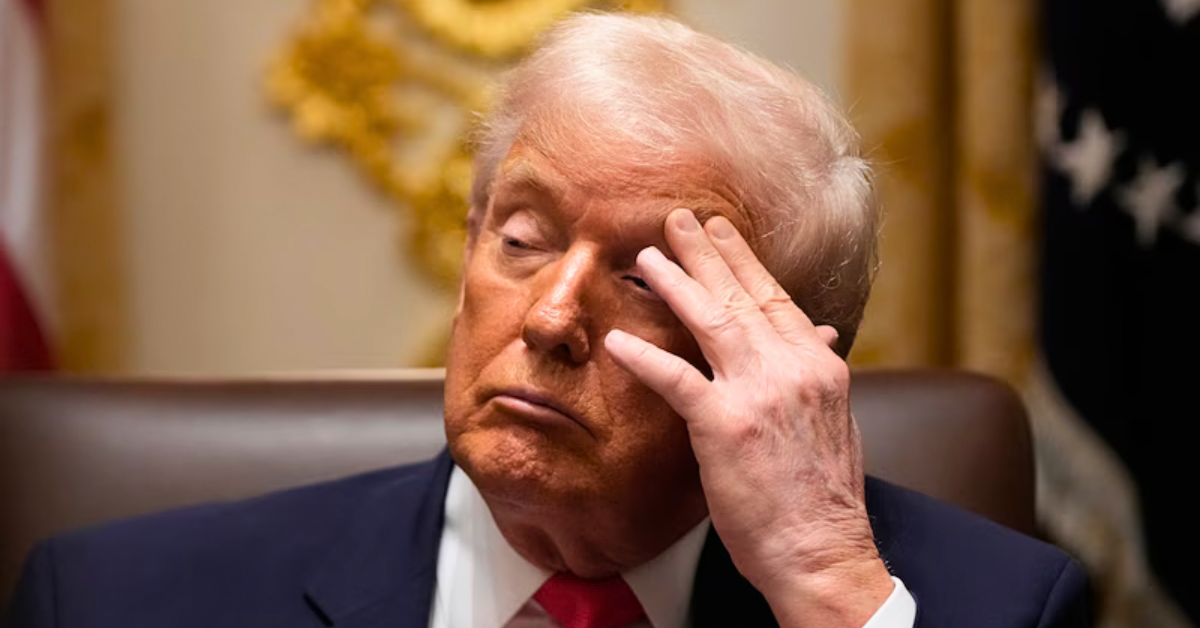
As the new year begins, President Donald Trump is encountering an unusual wave of resistance from within his own party on Capitol Hill.
While Republicans have largely rallied behind the president during his first year back in office, recent votes and public statements reveal cracks in that unity—particularly on foreign policy, domestic infrastructure projects, and health care affordability.
These tensions come at a critical moment, with the 2026 midterm elections approaching and historical trends suggesting challenges for the party controlling the White House.
The FrankNez Media Daily Briefing newsletter provides all the news you need to start your day. Sign up here.
– FNM
The surge in dissent was highlighted this week when dozens of House Republicans joined Democrats in attempts to override two of Trump’s recent vetoes.
Details of the Clash
The bills in question were relatively straightforward and bipartisan: one, introduced by Representative Lauren Boebert of Colorado, would extend federal support for the Arkansas Valley Conduit (AVC), a water pipeline project serving communities east of Pueblo.
The other, sponsored by Representative Carlos Gimenez of Florida, aimed to give the Miccosukee Tribe greater control over its tribal lands in South Florida.
Despite passing with broad support initially, the veto overrides fell short of the required two-thirds majority in Congress.
Still, the bipartisan coalitions—including significant Republican participation—marked a notable departure from the near-unanimous loyalty Trump has enjoyed.
On the Senate side, five Republicans—Josh Hawley of Missouri, Susan Collins of Maine, Todd Young of Indiana, Lisa Murkowski of Alaska, and Rand Paul of Kentucky—joined Democrats to advance legislation restricting Trump’s ability to launch further military actions against Venezuela.
This followed the recent U.S. capture of Venezuelan President Nicolás Maduro, which Trump has touted as a major success.
The move prompted a sharp response from the president, who posted on Truth Social that those senators “should never be elected to office again.”
Representative Mike Rogers of Alabama has also introduced separate legislation to curb presidential war powers more broadly, adding to the sense of growing congressional oversight concerns.
Republican Leaders Rebuke Greenland Rhetoric
Another flashpoint has been Trump’s escalating comments about annexing Greenland, which he has justified on national security grounds.
The White House has not ruled out military options, drawing swift criticism from key Republicans.
Senate Majority Leader John Thune stated, “I don’t see military action being an option there… That, to me, is not something anybody is contemplating seriously at this point.”
Mitch McConnell described the administration’s talk on Greenland as “counterproductive.”
Senator Roger Wicker said the topic “should be dropped,” while Senator John Curtis called military use “not appropriate, not necessary, and not something I will support.”
These rebukes underscore unease with potential overreach in foreign policy, even among staunch conservatives.
Health Care and Epstein Files

The pushback extends beyond foreign affairs. In a separate vote, 17 House Republicans crossed party lines to support extending enhanced Affordable Care Act subsidies, which expired at the end of last year and have contributed to rising insurance costs.
This move defied leadership and highlighted voter concerns about affordability heading into the midterms.
Additionally, the Department of Justice’s ongoing release of Jeffrey Epstein files has sparked questions over redactions, with figures like Representative Thomas Massie of Kentucky remaining vocal critics.
Former Representative Marjorie Taylor Greene, who left Congress this month amid her own criticisms of Trump’s foreign policy decisions—including strikes on countries like Iran and Venezuela—had previously warned of shifting dynamics within the party.
In a 2025 CNN interview, she noted, “I think the dam is breaking,” pointing to earlier instances where Republicans voted against Trump-backed measures without facing immediate repercussions.
Analysts Weigh In: Grip Intact, But Challenges Ahead
Political experts caution against overstating the significance of these moments.
Todd Belt, director of the Political Management Program at George Washington University, told Newsweek, “It’s too early to write Donald Trump’s epitaph as the head of the Republican party. As long as Donald Trump is alive, he will control Republican politics, even after he leaves office.”
Chandler James added, “We have to understand these Republican members of Congress, they’re going to stick with Trump as long as they believe it is in their interest to do so.
When they calculate that sticking with him is more costly, than breaking with him, I think a lot of them would break with him.”
Recent polling shows Trump’s approval among Republicans remains high at around 81%, though it sits at a second-term low. Overall approval hovers lower, and midterm dynamics often punish the president’s party.
Related Developments Fueling Midterm Anxiety
These internal frictions coincide with broader concerns for Republicans.
Recent polls indicate unease over economic issues, with Trump’s handling of the economy drawing criticism even from some GOP voters.
Analysts point to the 2026 midterms as a pivotal test, where off-year trends historically favor the opposition party.
If Republicans lose control of Congress, it could open the door to investigations and stall Trump’s remaining agenda.
The narrow House majority—further complicated by recent resignations and a tragic death—leaves little room for defections on key votes.
Meanwhile, Democrats are positioning these moments of dissent as evidence of disarray within the GOP.
As the election year unfolds, these early signs of independence suggest Republicans are beginning to weigh their own political futures against unwavering loyalty to the president.
While Trump’s influence on the party remains formidable, the events of early 2026 indicate that congressional Republicans are increasingly willing to assert themselves on select issues.
Independent media is under attack by industry policies, set FrankNez Media as a preferred source below to fight against media suppression.
Also Read: Bill Clinton Now Reacts to Heavily Redacted Epstein Photos Featured in Pool
Contact | About | Home | Newsletter
Google is changing how it surfaces content. Prioritize our high-quality news and industry-leading coverage in search results by setting FrankNez Media as a preferred source.