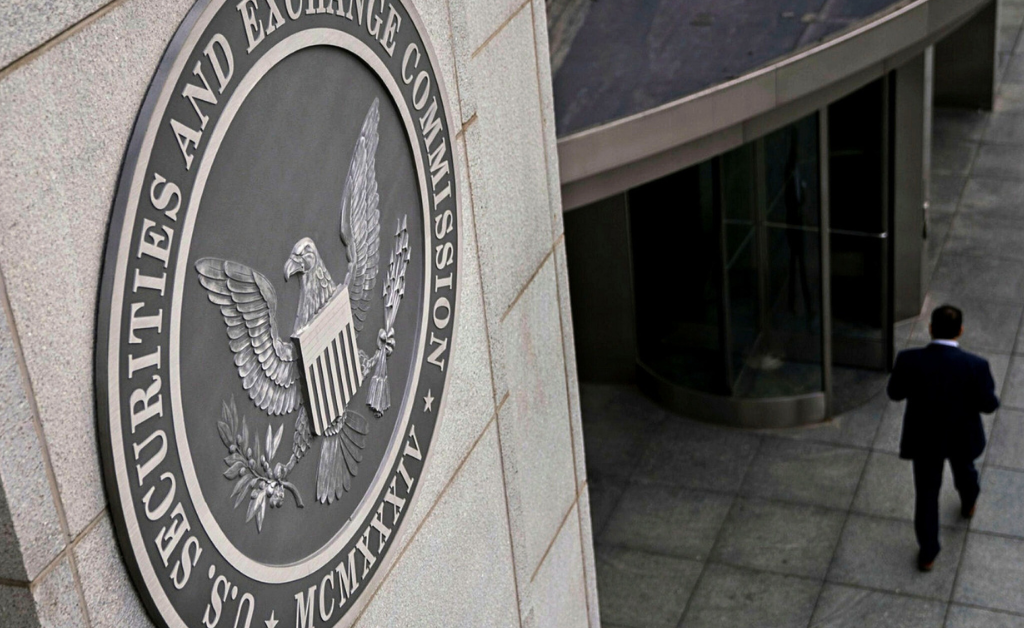



- Uniswap co-founder Hayden Adams accuses Citadel of trying to impose Wall Street rules on DeFi, calling their SEC filing self-interested and hypocritical.
- Citadel warns tokenized equities on DeFi could create a parallel market outside NMS, urging regulatory oversight that could stifle DeFi innovation.
In a fiery exchange that’s lighting up crypto Twitter this week, Uniswap’s co-founder Hayden Adams didn’t hold back when calling out Citadel Securities for what he sees as a blatant attempt to drag decentralized finance (DeFi) under the thumb of Wall Street-style oversight.
The spat, which erupted just days ago, highlights the growing tension between innovative blockchain projects and entrenched financial giants as regulators circle closer to the $100 billion-plus DeFi ecosystem.
Adams, whose Uniswap protocol has become a cornerstone of DeFi with billions in daily trading volume, took to X (formerly Twitter) on December 3 to vent his frustration.
The FrankNez Media Daily Briefing newsletter provides all the news you need to start your day. Sign up here.
– FNM
Responding to a recent filing by Citadel to the U.S. Securities and Exchange Commission (SEC), he accused the high-frequency trading powerhouse of hypocrisy and self-interest.
Details of the Conflict

“First Ken Griffin screwed over Constitution DAO,” Adams wrote, referencing Citadel CEO Ken Griffin’s firm allegedly blocking a high-profile bid to buy a rare copy of the U.S. Constitution back in 2021.
He continued, “Now he’s coming for DeFi, asking the SEC to treat software developers of decentralized protocols like centralized intermediaries.”
For those unfamiliar, Constitution DAO was a wild experiment in decentralized crowdfunding—a group of crypto enthusiasts who raised over $40 million in ether to bid on the document at Sotheby’s, only to fall short amid technical hurdles and, critics claimed, interference from traditional finance players like Citadel.
Adams didn’t let the opportunity pass to tie that old grudge to this fresh battle, suggesting Citadel’s latest move is just the newest chapter in a long-running feud.
What set Adams off? Citadel’s detailed 20-page comment letter to the SEC, submitted in late November as part of the agency’s broader review of tokenized assets and DeFi platforms.
In it, the firm—known for its dominance in market making and handling a massive chunk of U.S. retail stock trades—argues that DeFi isn’t the wild west of finance it’s often portrayed as.
Instead, Citadel posits that many DeFi systems actively “bring together the buyers and sellers of securities… using established, non-discretionary methods,” fitting them squarely under existing definitions of exchanges, broker-dealers, and other regulated entities.
Citadel Wants In

The letter dives deep into the mechanics of DeFi, breaking down roles across the stack: from front-end interfaces that users interact with, to smart contract developers who code the core logic, validators securing the blockchain, and liquidity providers injecting capital into pools.
Citadel points out that these players often collect transaction fees or steer order routing, blurring the lines between decentralized code and centralized control.
“Activities should not receive lighter treatment simply because they are implemented in code on a blockchain,” the filing states, pushing for a “technology-neutral approach” where the same rules apply whether trades happen via a traditional matching engine or an automated smart contract.
But Adams zeroed in on one argument that struck him as particularly galling: Citadel’s assertion that DeFi protocols fail to provide “fair access” to markets, a cornerstone of securities law designed to prevent insider advantages.
“Okay thats all pretty bad, but the actual nerve for one of their arguments to be that there is no way for DeFi protocols to provide ‘fair access’ of all things lmao,” Adams shot back on X.
He followed up with a zinger: “Makes sense the king of shady tradfi market makers doesn’t like open source, peer-to-peer tech that can lower the barrier to liquidity creation.”
It’s a pointed jab at Citadel’s reputation—long dogged by controversies over payment for order flow (PFOF), where it profits from routing retail trades, and past fines for misleading clients.

Speculation of Citadel Lobbying Way in Surfaces
Adams even speculated that “Bet Citadel has been lobbying behind closed doors on this for years,” implying the public filing is just the tip of a deeper influence campaign.
At the heart of Citadel’s concerns lies the rise of tokenized equities—digital versions of traditional stocks like Apple or Tesla shares wrapped on blockchains for seamless, 24/7 trading.
The firm warns that letting these trade on DeFi venues could spawn a “shadow equity market” outside the National Market System (NMS), the U.S. framework that ensures consolidated quotes, surveillance, and investor protections.
Fragmented liquidity, they argue, could erode market integrity, leaving everyday investors exposed to manipulation or uneven information.
“Tokenized equities trading on DeFi protocols would create a parallel equity market that operates outside the NMS,” the letter reads, urging the SEC to clamp down before it spirals.
Why This Is Important
This isn’t just abstract policy talk; it has real stakes for the crypto world — and Main Street.
Uniswap, with its UNI token up over 3.5% in the past day amid the buzz, embodies the permissionless ethos Citadel seems eager to rein in.
If the SEC follows the firm’s advice, developers could face broker-dealer registration requirements, exposing them to audits, capital rules, and potential liability for every trade on their protocols.
That could stifle innovation, pushing projects offshore or underground, much like how some stablecoins have navigated U.S. scrutiny.
Adams’ outburst has sparked a wave of reactions online, with DeFi advocates piling on Citadel as the poster child for everything wrong with centralized finance.
One prominent voice echoed the sentiment, tweeting that “Citadel wants DeFi to play by rules they bend every day.”
Others are digging into the filing’s footnotes, debating whether validators truly act as “intermediaries” or if liquidity providers deserve the same scrutiny as hedge funds.
As the SEC mulls its next steps—expected in early 2026—this clash underscores a fundamental rift: Can DeFi thrive without bending to legacy rules, or is it destined to evolve into something more like… well, Wall Street 2.0?
For now, Adams and his community are drawing a line in the blockchain, betting that open-source rebellion will outpace any regulatory dragnet.
This story will be updated as the SEC responds to public comments.
Also Read: Short Sellers Are Now Throwing One Another Under the Bus
Contact | About | Home | Newsletter
Google is changing how it surfaces content. Prioritize our high-quality news and industry-leading coverage in search results by setting FrankNez Media as a preferred source.